
Review · CANADA RAFTING TOURS
Full day of Rouge River White Water Rafting
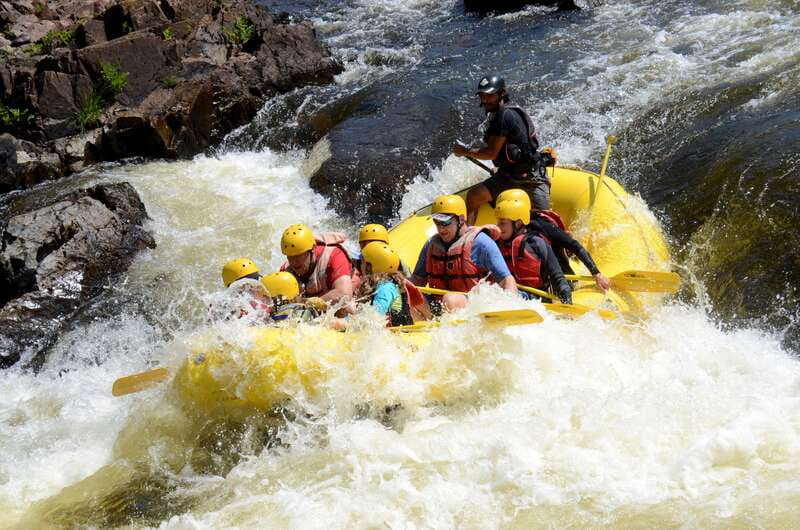
The Rouge River delivers its biggest thrills in quick succession: ledges, drops, waves, and continuous stretches of white water. You’ll tackle two runs totaling 16 kilometers, with calm pools and sandy beaches giving you time to catch your breath between rapids.
I like the full-day format, which gives the day a proper rhythm instead of rushing you through one short ride. I also like the mix of white water, swimming, raft surfing, lunch, dinner, and hot tubs. The main catch is location: the rafting base is not in Mont-Tremblant, but about 1 hour and 15 minutes from the resort, Montreal, or Ottawa.
Key points to know before booking
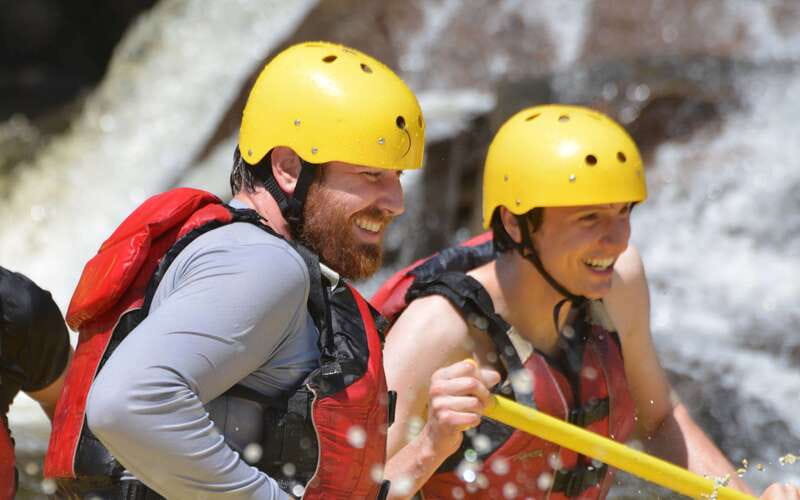
- Two major river runs: Raft about 16 kilometers in total, with each run lasting roughly two hours.
- The route changes with water levels: Spring trips usually use Harrington Canyon, while summer often brings the Seven Sisters rapids.
- Calm pools and sandy beaches: You get breaks for swimming, floating, and raft surfing between the rougher sections.
- A proper full-day setup: Lunch, barbecue or vegetarian dinner, equipment, guides, and end-of-day pool and hot tub access are included.
- Swimming ability is required: This is an active river trip with real physical exertion, not a gentle sightseeing float.
- The base is outside Mont-Tremblant: Allow about 1 hour and 15 minutes from Tremblant resort, Montreal, or Ottawa, with transport from Tremblant available.
Setting out on the Rouge River
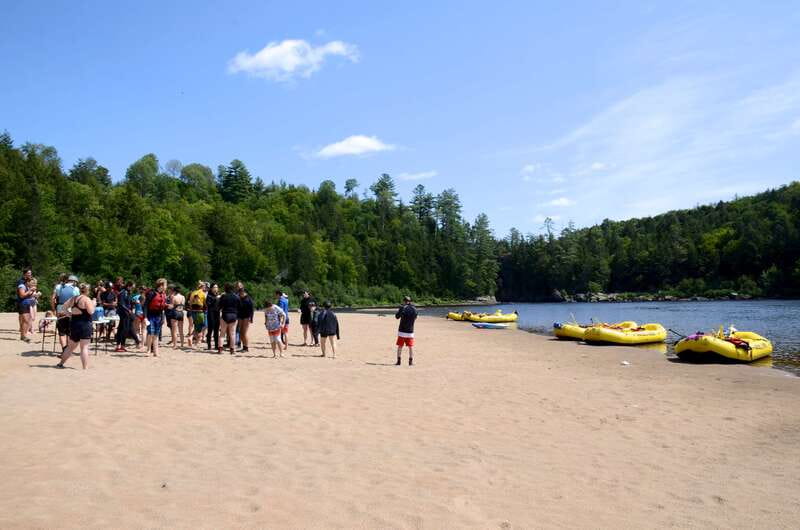
The Rouge River is one of Quebec’s best-known white water rafting rivers, and this outing has been running for more than 25 years. The appeal is simple: the river gives you serious rapids, then settles into calm water before the next challenge arrives.
That pattern makes the day easier to enjoy than a nonstop run of rough water. You get moments to look around, talk with your boatmates, and enjoy the river’s sandy beaches. Then the guide brings your attention back to the next rapid.
The exact route depends on water levels. In spring, when snowmelt and rainfall push the river higher, the action usually begins in Harrington Canyon. In summer, the focus often shifts to the Seven Sisters, a demanding section with long, continuous rapids.
That seasonal change matters. You are not buying a fixed ride on a controlled course. You are joining a river trip shaped by rainfall and flow. The river’s speed can change the time spent on the water, and the day’s route is selected to match current conditions.
More White Water Rafting in Canada
- Half-Day Whitewater Rafting in Revelstoke
★ 5.0 · 410 reviews - Banff: Kananaskis River Whitewater Rafting Tour
★ 4.9 · 328 reviews - Jasper National Park: 2-Hour Whitewater Rafting
★ 4.9 · 310 reviews
The morning briefing and first run
Your day begins with a safety briefing. This is not a minor formality. The guide explains how to paddle, how to react before a rapid, and how to work with the rest of the raft.
The rafts usually carry up to eight people, though a boat may hold as many as ten when there are many younger participants. That gives the boat enough people to paddle as a team without turning it into a huge floating crowd.
Once you are in the inflatable raft, your professional guide practices basic maneuvers with you. You learn how to respond to instructions before the river becomes loud and fast. The guide also explains what to do before each rapid, so you are not left guessing when the boat reaches a ledge or wave train.
The guides speak English and French. That is especially useful during safety instructions, where clear communication matters more than charm. You should expect active participation, not a ride where you sit back while someone else does all the work.
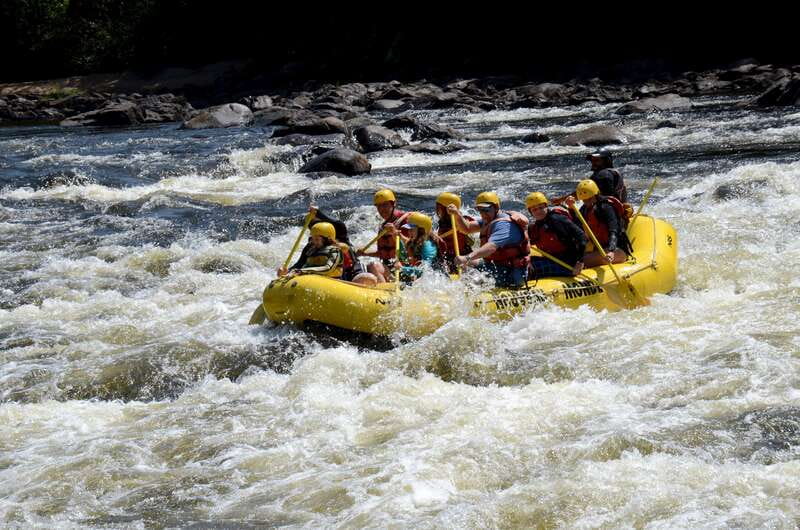
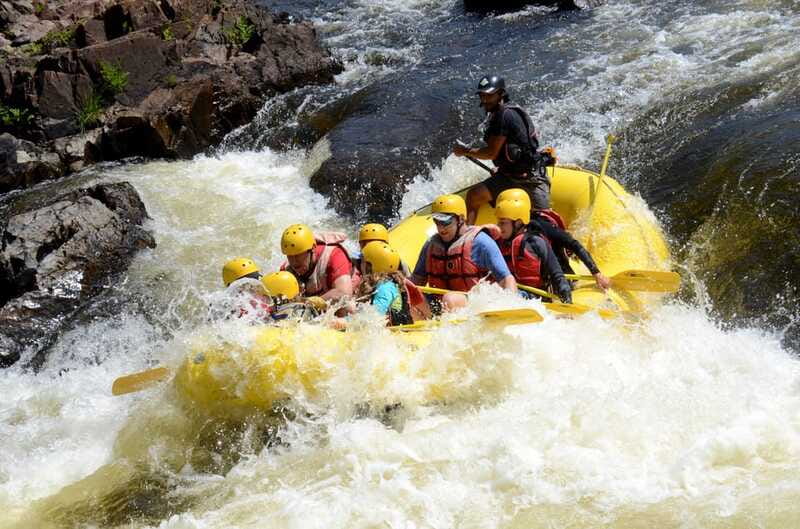
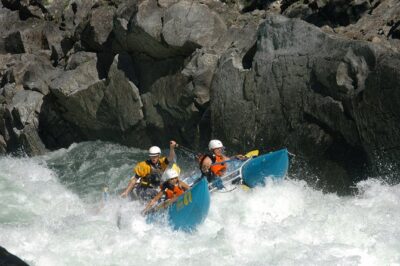
The first run covers some of the best rapids on the selected route. Harrington Canyon can provide the spring version of the adventure, while Seven Sisters often supplies the summer challenge. You may encounter a series of ledges, sudden drops, and large waves, with the guide calling for paddling at the right moment.
The point is not to conquer the river alone. Your boat succeeds by following instructions and paddling together. That makes this a good introduction for capable beginners, while experienced rafters still get plenty of action from the changing water.
What makes the rapids enjoyable for beginners and veterans
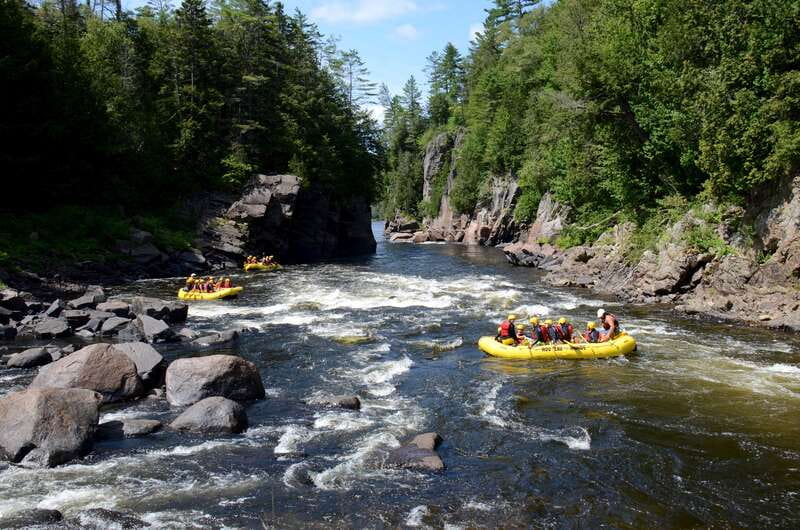
The Rouge River’s appeal is its variety. A single run is not just one long stretch of rough water. Rapids arrive in sections, followed by calmer pools where the raft can regroup.
That gives first-time rafters a chance to reset. You can listen to the guide, adjust your grip, and get comfortable with the boat before the next rapid. If you already know white water rafting, the same pauses let you enjoy the scenery and watch how the river moves.
Still, you should not confuse calm pools with an easy overall day. The activity requires physical effort, and all participants must know how to swim. The river can move quickly, and conditions change with rainfall. Anyone hoping for a quiet float should choose a gentler activity.
The guide explains how to react before each rapid, which helps turn nerves into useful focus. You will still feel the boat climb and drop, and you may get soaked, but the instructions give the experience structure.
The supplied equipment includes a helmet, high-buoyancy life jacket, paddle, and wetsuit. You need to bring swimwear, hiking shoes, and a change of clothes. Leave valuables at home. That last tip is practical: a fast river and loose personal items are a poor combination.
Harrington Canyon in spring, Seven Sisters in summer
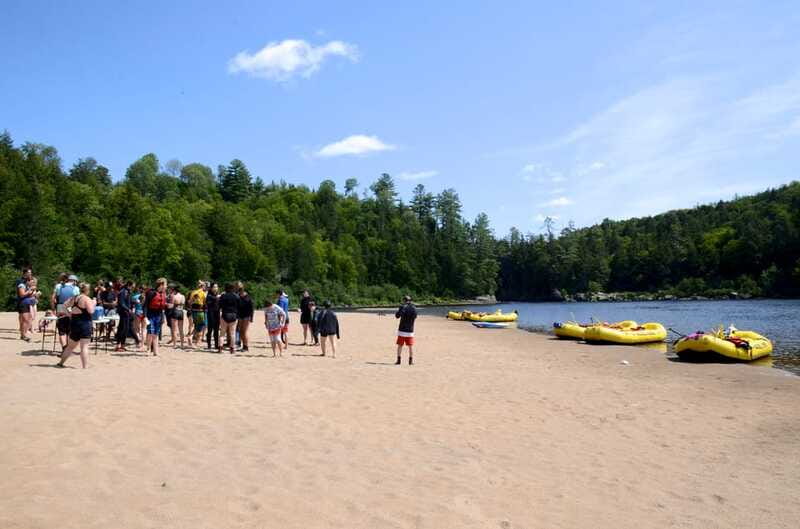
The seasonal route is one of the more interesting parts of this trip. During the spring flood, the rafting center usually uses Harrington Canyon. Higher water can make this section especially forceful, with fast current and sharp changes in the river.
In summer, the trips often use Seven Sisters. The name suggests a set of separate features, but the useful detail is that the section offers impressive continuous rapids. You may spend more time working through linked waves rather than waiting for each isolated drop.
You should not book with the expectation of a particular rapid unless the operator confirms the route for your date. Water levels decide the plan. That is good for safety and river quality, but it means the final character of your run can vary.
The route selection also keeps the activity interesting across the season. You get the part of the river that offers the best rafting under the current conditions, rather than forcing every group onto the same stretch regardless of water flow.
More Full-Day Rafting Trips in Canada:
- Browns Canyon Full Day Rafting Adventure
★ 5.0 · 825 reviews - Tully River Full-Day White Water Rafting
★ 5.0 · 669 reviews - Full Day Whitewater Adventure Trip with Included Lunch
★ 5.0 · 312 reviews - Full Day Browns Canyon Rafting
★ 5.0 · 205 reviews
Beaches, swimming, and raft surfing between rapids
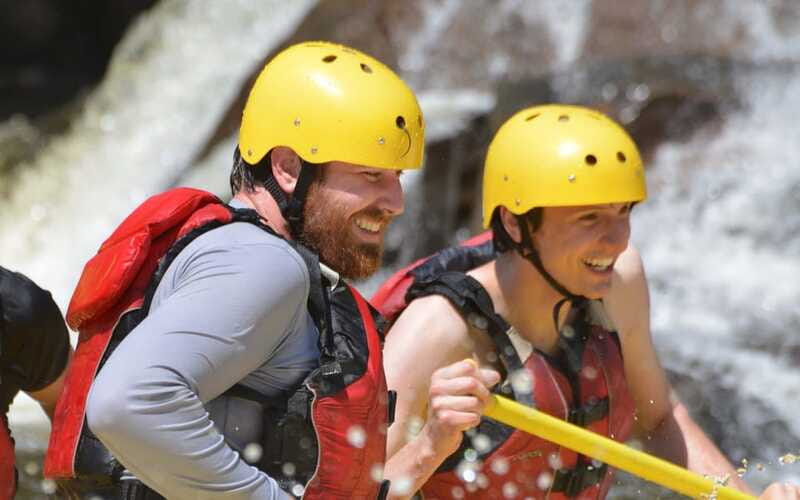
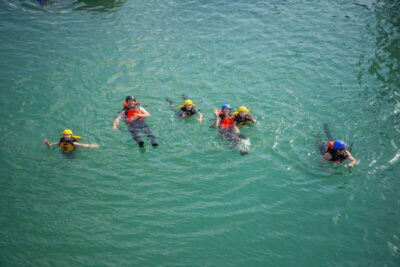
The quieter sections are not empty filler. The Rouge River has sandy beaches where you can stop between rapids, swim, float in the current, and try surfing the rafts.
These pauses help shape the day. You move from concentrated paddling to a more relaxed stretch where you can enjoy the river itself. The golden sand and open water give you a different view of the river than you get while gripping a paddle through a wave.
Raft surfing adds another playful element. The guide can help you use the current and raft in a controlled way, giving the group something to do beyond simply waiting for the next rapid.
Keep in mind that the exact amount of time at beaches and in calm water can change. The current speed varies with rainfall, so the day’s timing is not fixed down to the minute. That flexibility is part of a real river trip, but it can be less convenient if you have a tight evening schedule.
Lunch, dinner, and the second run
A light riverside lunch is included during the day. This is well timed for an activity that uses your arms, legs, and attention. You should still arrive ready for physical exertion, but having food built into the program means you do not need to plan a separate lunch stop.
After the river activity, a barbecue or vegetarian dinner is included. Drinks are available for purchase, including alcoholic drinks at the end of the day. The meal setup adds value because the outing occupies the full day and keeps you at the rafting center rather than sending you off to find food between runs.
The second run gives you another chance to apply what you learned in the morning. You may feel more comfortable with the paddle commands and boat movement by then. For beginners, that progression is important: the first run teaches the rhythm, and the second lets you take part with more confidence.
Together, the two runs cover approximately 16 kilometers, with each run lasting about two hours. The total time on the water can change with river conditions. That is enough rafting to justify the full-day commitment, but it also means you should expect a tiring day.
The post-rafting payoff
When the paddling is finished, you can use the rafting center’s facilities. Two large hot tubs, a pool, and large shower facilities are included. After a wet and active day, warm water and a proper shower are not small extras. They make the transition back to dry clothes much easier.
The center also has a 250-seat licensed timber-frame lodge. You can purchase drinks there, including alcohol after the day’s rafting is complete. A multimedia presentation of the rafting is included as well, and souvenir photos are available to buy separately.
I see the end-of-day facilities as one of the strongest reasons to choose this full-day program instead of a bare-bones rafting trip. You are paying for more than river time. You are also getting meals, changing facilities, a place to relax, and a social finish to the day.
The pool and hot tubs may be especially useful if you are traveling with a group. People who want to keep chatting after the final run can do so without standing around in wet gear.
What the $170 price includes
At $170 per person, this is not a budget activity. The value depends on how much of the full package you will use.
You get professional guides, bilingual instruction, the raft, helmet, life jacket, paddle, wetsuit, two rafting runs, approximately 16 kilometers on the river, lunch, dinner, and access to the pool and hot tubs. Those inclusions cover the costly and practical parts of a full-day outdoor activity.
The price looks stronger if you would otherwise pay separately for meals, equipment rental, changing facilities, and an after-rafting activity. It also saves you from arranging a short rafting trip and then filling the rest of the day yourself.
You should budget extra for drinks and souvenir photos. Alcoholic drinks at the end of the day are also not included. These are optional costs, but knowing about them helps you avoid treating the advertised price as the complete spend.
The high rating attached to the experience reflects a very positive overall impression, though the written feedback available is extremely brief. I would put more weight on the clearly stated inclusions and conditions than on a short comment.
Getting to the base from Quebec and Ontario
The meeting point can change depending on the option you book. The most important location detail is that the base is not in Mont-Tremblant.
It is about 1 hour and 15 minutes from Tremblant resort, and also about 1 hour and 15 minutes from Montreal or Ottawa. The rafting center sits between Ottawa and Montreal near the Ontario border. Transport from Tremblant resort is available, but you should confirm the transport option when booking.
This transfer time affects the shape of your day. If you are staying in Mont-Tremblant, the rafting trip is not a quick local add-on. You will need to allow for the journey in both directions, on top of a full day on the river.
For a road trip through the Laurentians or the Ottawa and Montreal corridor, the location is easier to fit in. For a short stay based only in Tremblant, check the departure time and return plan before committing.
Who should book this Rouge River trip?
I would recommend it to adults and children aged 12 and older who can swim and are comfortable with physical activity. Sixteen-year-olds must be accompanied by an adult, and a parent must sign the release form for a 17-year-old.
This works well for groups that want a full outdoor day with a mix of adrenaline and downtime. The sandy beaches, pool, hot tubs, meals, and lodge make it more varied than a short white water session.
It can also suit beginners who want instruction before taking on serious rapids. The safety briefing, practice maneuvers, and guide commands help you learn the basics in stages.
I would be cautious if you dislike getting wet, have no swimming ability, want a quiet sightseeing outing, or need a precise schedule. Pregnant participants cannot join, and the activity is not suitable for children under 12.
Should you book it?
Book this Rouge River rafting day if you want a substantial white water experience rather than a quick taste. The two runs, seasonal river sections, sandy beach stops, meals, and hot tub access create a full day with a clear beginning, middle, and finish.
The main decision points are practical: you must swim, accept real physical effort, and allow about 1 hour and 15 minutes to reach the base from Mont-Tremblant, Montreal, or Ottawa. At $170, the trip makes the most sense when you value the complete package and plan to use the included facilities.
If those conditions suit you, this is a strong choice for an active Quebec day. If you want a short, gentle, or centrally located activity, choose something else.
FAQ
How long does the Rouge River rafting activity last?
It is a full-day activity. You complete two rafting runs, each lasting approximately two hours, with the total time affected by the river’s flow rate.
How far do you raft?
The activity includes approximately 16 kilometers of rafting across two runs.
Which part of the Rouge River will I raft?
The route depends on water levels. Spring trips usually use Harrington Canyon, while summer trips often use the Seven Sisters section.
Do I need to know how to swim?
Yes. All participants must know how to swim.
What is the minimum age?
The minimum age is 12. Youth pricing applies to ages 12 through 16. A 16-year-old must be accompanied by an adult, and a parent must sign the release form for a 17-year-old.
What equipment is provided?
The operator provides a helmet, high-buoyancy life jacket, paddle, wetsuit, and raft. Professional guides and safety kayakers are also provided.
Are meals included?
Yes. A light riverside lunch and a barbecue or vegetarian dinner are included. Drinks and alcoholic drinks are available for purchase but are not included.
Is the rafting base in Mont-Tremblant?
No. The base is about 1 hour and 15 minutes from Tremblant resort and is located between Ottawa and Montreal near the Ontario border. Transport from Tremblant resort is available.
New on the river around Canada
- Extreme Whitewater Rafting on Kicking Horse River★ 5.0 · 77 reviews
- Class 3 Sunwapta River Rafting Adventure in Jasper★ 5.0 · 33 reviews
- Rafting Athabasca Falls Run in Jasper★ 5.0 · 44 reviews
- Whitewater Rafting on Jasper’s Fraser River★ 5.0 · 59 reviews
- Rafting on Athabasca River Mile 5 in Jasper★ 5.0 · 82 reviews
- Athabasca Expressway Whitewater Rafting★ 5.0 · 46 reviews
- Nahatlatch River Rafting – 24 Amazing Rapids★ 5.0 · 6 reviews
- 3.5 Hour Whitewater Rafting and Waterfall Adventure★ 5.0 · 48 reviews
Canada Rafting Tours, compared.
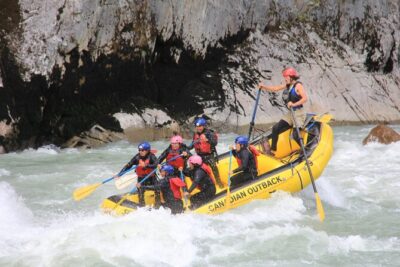
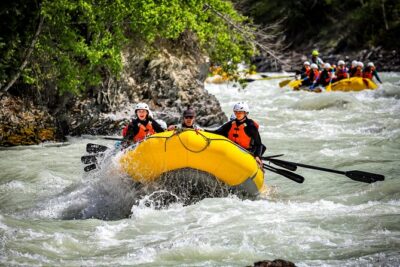
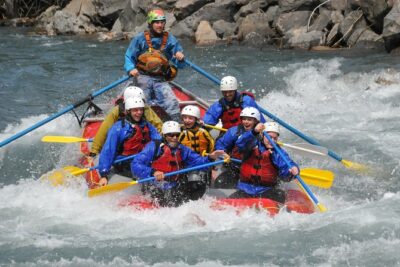
Clearwater, BC, Rafting, Finish in Canadas waterfall capital!
Read our review →
Jasper National Park: 2-Hour Whitewater Rafting
Read our review →
Other lists with this river day