
Review · RAFTING
Pu Luong Amazing Trekking Village,Rafting,Swimming, Lunch on Boat
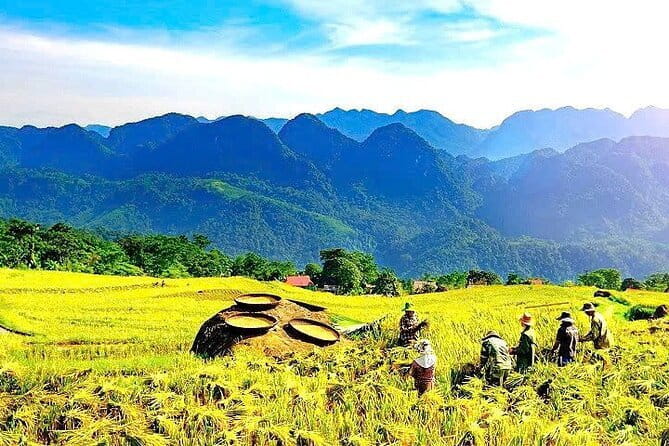
The best part of this Pu Luong outing is how quickly it moves you from Thai village craft to rice fields, old waterwheels, and a bamboo raft on Cham Stream. You get a close look at daily rural life, not just a scenic drive and a quick photo stop.
I like the small group size, capped at 12, and I like the guide-led local contact. Guides such as Nga and Lila add useful stories about plants, customs, and village life. Lunch on the raft is another fine touch. The main drawback is the brisk schedule: four hours gives you a good taste of Pu Luong, but not much time to linger.
Key points at a glance

- Silk weaving with a Thai household: Watch local craft work and try the process yourself.
- A 4-kilometer countryside walk: Follow paths toward Cham Stream through rice fields and village scenery.
- Ancient waterwheels in action: See how traditional farming still makes use of the stream.
- Bamboo rafting with lunch: Float past fields, forest, and villages while eating on the boat.
- Strong English-speaking guides: Nga and Lila are praised for warmth, clear conversation, and cultural explanations.
- A compact morning outing: Pickup begins at 8:30 AM and the activity ends around 12:15 PM back at the meeting point.
A Pu Luong morning built around village life

Pu Luong is at its best when you slow down enough to notice how people work, travel, and use the land around them. This tour gives you that view in a compact morning. You are not simply driven to a viewpoint. You move through several parts of local life, from silk production to farming and river travel.
The setting is the Pu Luong Nature Reserve area in Thanh Hoa Province, with the activity beginning at Puluong Retreat in Thanh Lam. Your air-conditioned vehicle takes you through rice fields and mountain scenery to Lan Village. From there, the morning becomes more hands-on and more personal.
The group limit of 12 matters here. A small group makes it easier to hear an explanation beside a loom, ask questions in a local home, and walk without the feeling of being part of a large procession. It also suits families. One account describes children aged two and six taking part in activities that included animal feeding, local tea, rafting, craft work, and swimming.
Still, this is a short tour. The plan packs several experiences into four hours, so you should expect an introduction rather than a long cultural study. If you want a slow village stay, a full-day trek, or hours beside the water, choose a longer outing.
More Rafting Trips with Lunch in the world:
- Antalya: Ziplining, Rafting, Jeep Tour & Quad Safari w/Lunch
★ 4.6 · 3,260 reviews - Bali: Ayung River Guided Rafting Adventure with Lunch
★ 4.7 · 2,289 reviews - Alanya: Rafting, Zipline, Quad, Buggy, Jeep Tour with Lunch
★ 4.6 · 1,561 reviews
8:30 AM: the drive to Lan Village
Pickup is scheduled for 8:30 AM at Puluong Retreat. The drive itself is part of the morning, with rice fields and mountains appearing along the route. Since the vehicle is air-conditioned, the transfer is more comfortable than an open ride, especially if the morning is warm.
At Lan Village, you visit a Thai household to see silk weaving. This is one of the most distinctive parts of the experience because it puts a practical skill in front of you. You can watch the work closely and try weaving yourself, rather than treating the craft as something viewed behind glass.
The activity also connects with other local processing work. The tour description focuses on silk, while the experience has included close looks at bamboo and cotton processing as well. That makes the craft stop more useful for anyone interested in how village materials become everyday goods.
Guide Nga is especially associated with this kind of introduction. She has been praised for explaining local culture in clear English, keeping the mood light, and helping visitors connect the craft work to daily life. Lila has also led the outing and is described as kind and helpful.
The practical point is to stay curious and patient. Handmade work can look simple until you try it. The value here is not a polished show. It is seeing a real skill practiced in a household setting and having a chance to handle the process yourself.
Chieu Lau Village and the old waterwheels
The next stop is Chieu Lau Village, where you see ancient waterwheels and traditional farming methods. These wheels are not just scenic objects. They show how villagers have used moving water to support cultivation in a place shaped by streams, slopes, and rice paddies.
I like this stop because it gives the surrounding countryside some context. The rice fields are beautiful, but the waterwheels help you understand the work behind them. Your guide can explain how people, plants, and farming customs fit together, which adds more meaning than a quick walk through fields alone.
The stop is also a good moment to watch the pace of village life. You may see farming activity and hear about local customs, though the exact conditions will depend on the day and season. The provided plan does not promise a demonstration of every farming task, so treat this as an observation stop rather than a working lesson.
There is a small tradeoff. The tour gives you time to see the wheels and hear about their role, but it does not offer a long technical visit. If old machinery and agricultural systems are your main interest, you may wish for more time. For most people, though, the stop provides a memorable link between the stream and the fields.
The 4-kilometer walk to Cham Stream
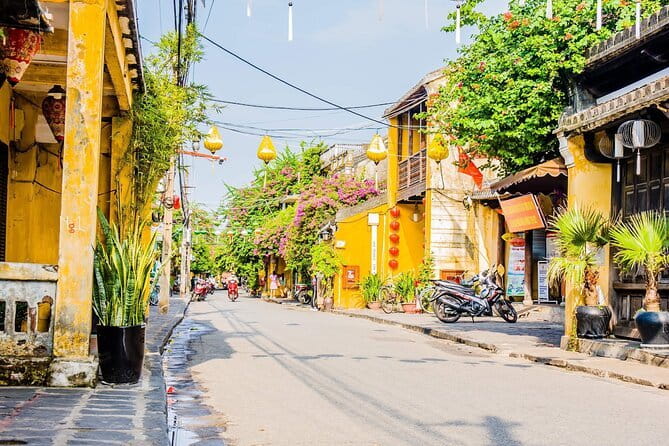
At about 10:00 AM, you set out on a 4-kilometer trek toward Cham Stream. This is the central walking section, and it lets you experience Pu Luong at ground level rather than through a vehicle window.
The route passes through countryside, rice paddies, and village areas. The views are the reason to bring a camera, but the walk is also about small details: paths between fields, homes, plants, and the rhythm of local work. Guides have been praised for pointing out plants and explaining customs along the way.
The description calls this an easy trek, but you should still wear shoes suited to uneven outdoor paths. The tour does not provide a detailed surface report, and rural routes can feel different after rain or during farming activity. Comfortable footwear and sun protection are sensible choices.
At roughly 10:45 AM, the group reaches Cham Stream. The timing shows how briskly the morning moves. You have about 45 minutes from the start of the walk to the stream, with a stop at a local home along the route.
More Hiking Trips around the world:
- Chiang Mai: 2-Day Jungle Trek with Elephant Farm & Raft Ride
★ 4.7 · 881 reviews - Monkey Business 3 days – 2 nights Jungle trekking (including rafting)
★ 5.0 · 294 reviews - Bali: Mount Batur Sunrise Trek and White Water Rafting
★ 4.8 · 193 reviews - Monkey Business 2 days – 1 night Jungle Trekking (including rafting)
★ 5.0 · 121 reviews
A local home and a taste of regional hospitality
The stop at a local home is brief but important. You get to meet people in a setting that feels more personal than a formal attraction. Tea, a small meal, or a simple welcome may form part of the visit, depending on the arrangements that day.
This is where a friendly guide makes a real difference. Nga is praised for keeping conversations going in English and for explaining local customs in a way that helps you understand what you are seeing. The experience is not only about taking photos. It gives you a chance to ask questions and notice how homes, food, and hospitality shape village life.
Some accounts also mention a local café or village meal, along with delicious food. The scheduled tour specifically includes lunch on the bamboo boat, so you should not assume that a separate café meal is always included. Think of the home stop as a cultural meeting point, with the main meal coming later.
A little courtesy goes a long way here. Follow your guide’s lead about where to sit, what to photograph, and how to greet people. The more respectfully you approach the visit, the more natural the exchange is likely to feel.
Bamboo rafting on Cham Stream

The final major activity is the bamboo rafting trip. You board a bamboo boat and drift along Cham Stream, passing lush forest, rice paddies, and villages. This is not a fast white-water ride. It is a calm way to see the countryside from the water.
The boat changes the feel of the morning. After the walk, you can sit back and watch the scenery slide by. You are close enough to the water to notice the stream and the banks, but the activity remains gentle in the description provided.
Lunch is served on the boat, which makes the raft ride more than a short transport link. The meal has been praised as delicious, and it gives you time to relax while the guide continues to share information. Bottled water is included, but drinks beyond that are not, so bring extra money if you want something else.
The title of the experience includes swimming, and one account also mentions swimming at a waterfall. The scheduled plan clearly guarantees bamboo rafting and lunch on the water, but it does not give a fixed swimming time or detailed swimming conditions. If getting in the water is important to you, ask Divi Travel to confirm whether swimming is available on your date and what you should bring.
The rafting section is likely to be the most relaxing part of the outing. It is also weather-sensitive. Water levels and local conditions can affect how the ride feels, so keep your expectations flexible.
What the $35 price includes

At $35 per person, the tour offers good value if you want several activities in one short morning. The price covers an air-conditioned vehicle, bamboo rafting, lunch on the boat, bottled water, entry fees, and an English-speaking local guide.
That combination matters. Paying separately for transport, admissions, a guide, a meal, and a river activity can add up quickly. Here, the main costs are bundled into one booking, and the small group limit improves the experience without turning it into a private tour.
The value is strongest for people staying nearby who want a structured introduction to Pu Luong. You get craft, farming, walking, village contact, and rafting in about four hours. It is less compelling if you already have several days in the area and would rather spend a whole day on one trail or in one village.
Drinks, gratuities, and personal expenses are extra. I would carry some Vietnamese currency for drinks or small purchases, though no shopping requirement is stated. Tipping is not included, so you can decide what feels appropriate based on the guide and service.
The activity is often booked well ahead, with an average booking time of 29 days in advance. That suggests you should reserve early if your Pu Luong dates are fixed, particularly if you want a particular morning.
The guides make the difference

The guide is the thread connecting the separate stops. Nga is repeatedly associated with energy, warmth, strong English, and useful explanations about Vietnamese culture, plants, people, and customs. Lila is also described as kind and helpful.
That matters because the tour is not built around major monuments. Its appeal comes from interpretation and contact. Without a good guide, silk weaving could become a quick demonstration, the waterwheels could look like old machinery, and the walk could become a pleasant but empty stroll.
With a good guide, you can understand why the craft matters, how farming relates to the water, and what you are seeing in the villages. The available information does not guarantee that Nga or Lila will lead every departure, so you should not book solely around one name. Still, the guide quality is one of the experience’s clearest strengths.
Who should book this Pu Luong outing?
I would recommend it to you if you want a short, active introduction to Pu Luong and prefer local contact over a viewpoint-only tour. It suits couples, families, first-time visitors, and anyone who wants a mix of walking, culture, food, and water in one morning.
Families may find the variety useful. Craft work, animals, village visits, rafting, and the chance to swim can give younger children several things to anticipate. The 4-kilometer walk still means you should consider your family’s comfort with walking outdoors. The tour information says most people can participate, but it does not provide a detailed accessibility assessment.
I would be more cautious if you dislike a fixed schedule. The morning moves from one stop to the next, and lunch on the raft comes after the walk. You also may not get much quiet time at any single location.
This is not the best fit for someone seeking a demanding trek. It is described as an easy countryside walk, with the cultural stops and rafting carrying much of the appeal. Nor is it a guaranteed swimming excursion. Swimming appears in the experience description and past activity details, but the firm scheduled elements are the trek, rafting, and lunch.
The meeting point is Puluong Retreat, and the activity ends back there around 12:15 PM. Pickup is offered, but the supplied details identify the meeting point rather than a wider list of pickup zones. Confirm your exact pickup arrangement when booking.
Cancellation is free up to 24 hours before the 8:30 AM start for a full refund. Changes or cancellations inside 24 hours are not accepted or refunded.
Should you book it?
Book this tour if you want to understand Pu Luong through people, work, water, and scenery, all without giving up an entire day. The combination of silk weaving, old waterwheels, a 4-kilometer walk, and a bamboo raft is unusually varied for a four-hour outing. The price is fair, especially with lunch, transport, entry fees, water, and a guide included.
Skip it if your priority is a long hike, a guaranteed swim, or a completely unhurried village visit. For most visitors based at or near Puluong Retreat, though, this is a smart morning choice. Bring comfortable shoes, sun protection, a little spending money, and an open attitude toward local life. You will come away with more than a set of rice-field photographs.
FAQ
Where does the Pu Luong tour start and end?
The tour starts at Puluong Retreat in Thanh Lam, Ba Thuoc District, Thanh Hoa, Vietnam. It ends back at the same meeting point.
What time does the activity begin?
The scheduled start time is 8:30 AM. The experience finishes at approximately 12:15 PM.
How long is the tour?
The activity lasts about four hours.
What activities are included?
You visit a Thai household for silk weaving, see traditional farming and ancient waterwheels, walk about 4 kilometers through the countryside, visit a local home, and go bamboo rafting on Cham Stream with lunch on the boat.
Is lunch included?
Yes. Lunch on the bamboo boat and bottled water are included. Drinks beyond the included bottled water are not included.
What is the maximum group size?
The tour has a maximum of 12 participants.
Can I cancel for a full refund?
Yes. You can cancel at least 24 hours before the local start time for a full refund. Cancellations or changes made less than 24 hours before the start are not refunded or accepted.
New on the river around the world
- Half-Day Family-Friendly Moab Raft Trip★ 5.0 · 49 reviews
- Moab Full-Day White Water Rafting Tour in Westwater Canyon★ 5.0 · 74 reviews
- Cataract Canyon Rafting Adventure from Moab★ 4.5 · 85 reviews
- Fisher Towers Rafting Full-Day Trip from Moab★ 4.5 · 102 reviews
- Half-Day Rafting Adventure on the Mendoza River★ 4.5 · 46 reviews
- Meteora Rafting Day Trip with Pick up from Kastraki, Kalambaka, Trikala★ 5.0 · 22 reviews
- Minakami Half-Day Rafting Adventure★ 5.0 · 34 reviews
- Fun White Water Rafting (Optional Paragliding) Private Tour from Medellin★ 5.0 · 38 reviews