
Review · ARGENTINA RAFTING TOURS
Rio de las Vueltas Rafting Experience – El Chalten
The best part of this rafting trip is the change of scene. You begin on calm, twisting water with Cerro Fitz Roy and Cerro Torre in view, then enter a narrower canyon packed with class III and III+ rapids. Patagonia feels very different from the trail here, and you get a real dose of speed without giving up the scenery.
I like the excellent safety setup, with experienced guides such as Lolli, Tomás, Mateo, and Tommy, plus a safety kayaker on some departures. I also like that the base is in El Chaltén, the river access is only about five minutes away, and all the cold-water gear is supplied.
The main consideration is the physical demand. You need strong fitness, you will get wet, and the cold can be serious in poor weather. The trip is not suitable for children under 16 or adults over 60, and several medical conditions exclude participation.
Key points to know before you book
- A calm 6 km opening section gives you time to learn paddle commands, safety skills, and raft technique before the rapids begin.
- The main 10 km section reaches class III to III+, with a portage before the rapid run through the canyon.
- Fitz Roy, Cerro Torre, forest, steppe, and wildlife fill the quieter parts of the route.
- All major rafting gear is included, including a neoprene suit, thermal layer, jacket, helmet, life jacket, boots, gloves, and paddle.
- The base is in El Chaltén, with a short van ride to the river and return transport after the descent.
- Bring spare underwear or swimwear, since you will get wet even inside the supplied equipment.
Why rafting Río de las Vueltas is worth your time
El Chaltén is famous for hiking, but a rafting trip shows you the area from a lower and faster angle. The Río de las Vueltas begins at Lago del Desierto, fed by glacial water, and runs toward Lake Viedma. From the raft, you look up at the mountains rather than toward them from a trail.
That change matters. On foot, your attention stays on the path, the weather, and the next viewpoint. On the river, the guides manage the route while you watch the valley open around you. The first section is quiet enough to take in Fitz Roy, the satellite needles, the Andean forest, and the broad Patagonian steppe.
Then the mood shifts. The river enters a canyon, and the outing becomes an active whitewater run rather than a scenic float. You paddle as a team, respond to commands, and work through a sequence of rapids. It is a good way to add adventure to a hiking-heavy stay.
More rafting trips around the world:
- Chiang Mai: Elephant Sanctuary, Waterfall & Bamboo Rafting
★ 4.9 · 9,160 reviews - Ocean Rafting: Whitehaven Beach, Snorkelling & Hill Inlet Lookout
★ 5.0 · 4,777 reviews - Bali: Ubud Gorilla Face ATV and Ayung Rafting Trip with Meal
★ 4.8 · 4,765 reviews
From San Martín 872 to the river in five minutes
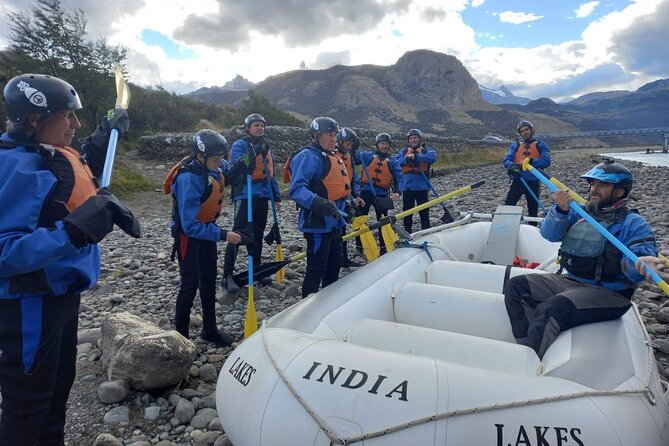
Your day starts at the Comarka Rafting dome at San Martín 872 in El Chaltén. The base is convenient if you are staying in town, and the activity ends there as well. You receive your equipment before boarding the van.
The short transfer is useful because it keeps the day compact. You are not spending an hour on a road before reaching the water. The river entrance is about five minutes from the base, so most of the roughly three-hour experience is devoted to gearing up, instruction, rafting, and changing afterward.
At the river, the guides give a technical and safety briefing. This is especially important if you have never rafted before. The instruction covers paddling and safety techniques, and the opening calm water gives you a chance to practice before the harder section.
The group limit is 16 people. That is large enough to create a lively boat outing but still small enough for the guides to keep an eye on the group. Some departures also include a kayak safety escort, which adds another layer of support around the rafts.
A calm 6 km start beneath Fitz Roy
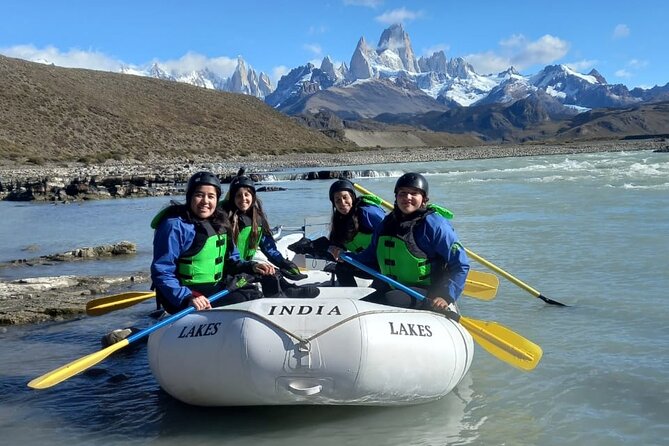
The first six kilometers are calm and winding. Think of this section as both a scenic introduction and a practical lesson. You learn how the raft responds, how to follow paddle commands, and how to work with the rest of your boat.
This is the best time to look around. Cerro Fitz Roy and its satellite peaks provide the biggest visual reward, especially when the weather is clear. The itinerary also highlights Cerro Torre, and the route gives you a chance to see the area’s major peaks from a viewpoint that hikers do not get.
The river corridor shifts between Andean forest and open steppe. You might also see native animals and birds along the banks. Keep your eyes open during the quiet stretches, since the scenery moves past quickly once the rapids begin.
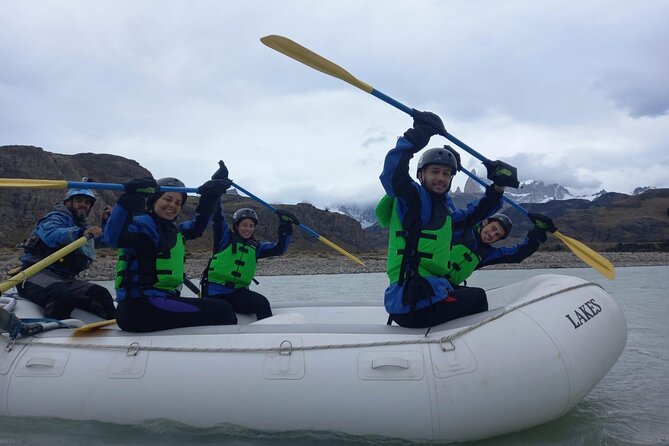
Weather makes a real difference to the views, but it does not automatically ruin the outing. Several participants had cold, wet, windy, or snowy conditions and still found the experience enjoyable because the gear and guides kept the activity moving. On a sunny day, the mountain views are clearly the prize. On a gray day, the river and canyon provide more of the interest.
The canyon run and its class III rapids
After the calm opening, the river reaches the canyon area. The first rapid is called Portage, and after that comes roughly 10 kilometers of class III to III+ whitewater. This is the section for adrenaline, teamwork, and the occasional shout of delight.
Class III is serious enough to feel exciting, but it is not an expert-only standard. First-time rafters can take part if they meet the fitness and age rules and follow the instructions. The guides are used to teaching beginners, and their approach combines clear commands with encouragement.
Conditions change the character of the run. Water levels can affect the size and shape of the rapids. One account described a class III-plus river with a section not being run at a higher level, while another noted smaller rapids during low water. That means you should not expect exactly the same ride every day.
You may get splashed, bumped around, or briefly thrown off balance. Participants have ended up in the water and were retrieved quickly, which is a normal risk of rafting, not a sign that the operation is careless. Listen closely, hold your position, and treat the safety talk seriously.
The canyon is also where the views become more enclosed. Instead of looking across a broad valley, you pass between rock walls and see the river working its way through a tighter route. It is a satisfying contrast to the quiet opening.
Same river, a different way down:
- Antalya: Ziplining, Rafting, Jeep Tour & Quad Safari w/Lunch
★ 4.6 · 3,260 reviews - Khao Lak: Rafting, Elephant Bathing & Sea Turtle Center Tour
★ 4.7 · 2,519 reviews - Maui Eco-Raft Tour: Eye-Level Whale or Dolphin Watching – Lahaina
★ 5.0 · 2,482 reviews - Bali: Ayung River Guided Rafting Adventure with Lunch
★ 4.7 · 2,289 reviews
Gear that makes cold Patagonia possible
The outfit provides the equipment you need for cold-water rafting:
- Neoprene suit
- Thermal shirt
- Waterproof jacket
- Life jacket
- Helmet
- Neoprene boots
- Neoprene mittens
- Simple paddle
You change into the equipment at the base and leave your other belongings there. The supplied layers are a major part of the price, since buying or carrying this kind of gear would be impractical for most visitors.
You should still prepare properly. Wear swim shorts or spare underwear under the supplied layers, and bring dry underwear for afterward. A polyester or swim shirt can work as a base layer. On very cold days, wool socks inside the neoprene boots may help, though the fit of the boots matters.
You will get wet. The gear is designed to keep you warm, not perfectly dry. At the end, the base provides hot drinks and snacks, including tea, coffee, mate, and pastries or similar light food. That warm finish matters after a cold run, particularly when the weather turns rough.
Fitz Roy, Cerro Torre, and Patagonia from the water
The itinerary lists Cerro Fitz Roy, Cerro Torre, and Patagonia as its main scenic themes. These are not formal sightseeing stops where you get out and walk around. They are views along the river, mixed into the moving experience.
Fitz Roy is the most important visual feature. From the water, you see it in relation to the valley, forest, and river rather than as a single distant peak. The satellite needles add detail around the main mountain and make the quiet opening section worth savoring.
Cerro Torre is another reason to keep your head up between rapids. Exact visibility depends on clouds and wind, and the mountain may not be clear throughout the trip. Still, seeing these peaks from the river adds a useful second perspective if you have already hiked to nearby viewpoints.
The scenery is not limited to mountains. Guanacos have been spotted moving across the slopes, and the river corridor supports native birds and other wildlife. The chance to see animals is incidental, so do not treat it as a wildlife tour. The main focus remains rafting.
Friendly guides and a sensible safety culture
Guide quality matters more on a rafting trip than on a standard sightseeing outing. Names connected with this operation include Lolli, Lollito, Lolita, Tomás, Mateo, Tommy, and Germán. The team is described as friendly, attentive, professional, and skilled, with instructions given in both English and Spanish on at least some departures.
That language flexibility helps mixed groups get the commands right. You need to understand what to do quickly once the raft reaches whitewater, so clear instruction is more than a nice extra.
The guides also help set the tone. They can make first-time rafters feel comfortable without making experienced rafters feel bored. Families with older teenagers and groups with mixed experience levels have found the trip manageable, while experienced rafters have still enjoyed the river’s stronger sections.
The safety kayak, used on some outings, is another reassuring detail. It does not remove the normal risks of whitewater, but it gives the group an additional trained person on the water.
Is $120 a fair price?
At $120 per person, this is not a cheap half-day activity, but the price includes more than a boat ride. You receive the technical equipment, van transport from the base to the river and back, professional guiding, instruction, the rafting descent, and hot drinks with snacks afterward.
The included gear is the biggest value point. El Chaltén is a cool, changeable place, and most people do not arrive with a full set of rafting equipment. The price also covers access to a glacial river route that would be difficult to arrange independently.
The experience is usually booked about 38 days ahead, so reserve early if your dates are fixed. With a maximum of 16 participants, popular days can fill before you arrive in town.
Transportation from El Calafate is not included. You need to reach El Chaltén on your own and make your way to the San Martín 872 meeting point. The activity finishes back at the base, and on at least some occasions the crew has helped with a ride to nearby accommodation after changing, but you should not treat that as a guaranteed inclusion.
Who should book this river trip?
This is a strong choice if you want a break from hiking, enjoy active outings, or want to see Fitz Roy and Cerro Torre from a fresh angle. It suits first-time rafters as well as people who already know their way around a paddle.
You need good physical fitness and the ability to pay attention, walk, coordinate movement, and follow instructions. The operator excludes people with respiratory conditions such as COPD, asthma, or emphysema, cardiovascular disease, epilepsy, obesity, or disabilities that affect attention, walking, or coordination. People with pacemakers, stents, or other cardiovascular prostheses cannot participate.
The age range is limited to 16 through 60. Children under 16 cannot join, even if they are strong swimmers or have rafting experience. Check these rules before paying, since they are firm and a medical concern is not something to sort out at the meeting point.
The activity requires suitable weather. If poor weather forces cancellation, you can choose another date or receive a full refund. Otherwise, cancel at least 24 hours before the local start time for a full refund. Later cancellations and last-minute changes are not accepted for a refund.
Should you book Rio de las Vueltas rafting?
Book it if you want a well-supported adventure with real rapids, strong scenery, and a short transfer from town. The combination is unusually efficient: calm water for instruction, a long canyon run for excitement, mountain views, supplied cold-weather gear, and a hot drink at the finish.
Skip it if you dislike cold water, need a gentle sightseeing outing, or do not meet the fitness, age, or medical requirements. Also remember that photography is optional and not included. Guides may take photos during the run, but you should ask about the price before purchasing them.
For most fit visitors who have at least one free morning or afternoon in El Chaltén, I would make this a serious contender. It gives you a different way to experience Patagonia, and it does so without sacrificing the mountain views that brought you to town in the first place.
FAQ
How long does the Río de las Vueltas rafting experience last?
The activity lasts approximately three hours, including equipment preparation, transport to the river, safety instruction, rafting, changing, and refreshments.
Where does the rafting trip begin?
It begins at the Comarka Rafting dome at San Martín 872 in El Chaltén, Santa Cruz, Argentina.
How far is the river entrance from the base?
The river entrance is about five minutes from the rafting base by van.
What level are the rapids?
The route includes class III to class III+ rapids after the initial Portage section. The exact difficulty can vary with water levels and conditions.
Is rafting equipment included?
Yes. The package includes a neoprene suit, thermal shirt, jacket, life jacket, helmet, neoprene boots, mittens, and a simple paddle.
What should I wear underneath the supplied gear?
Wear swim shorts or spare underwear, and consider a polyester or swim shirt as a base layer. Bring dry underwear for changing afterward.
Are food and drinks included?
Yes. Tea, coffee, mate, and snacks are provided after the rafting descent.
Is transportation from El Calafate included?
No. Round-trip transportation to El Calafate is not included. You must arrange your own travel to El Chaltén and the meeting point.
Can I cancel for a full refund?
Yes, if you cancel at least 24 hours before the local start time. Cancellations or changes made less than 24 hours before the start are not refundable. If poor weather causes the operator to cancel, you can receive a full refund or choose another date.
New on the river around the world
- Half-Day Family-Friendly Moab Raft Trip★ 5.0 · 49 reviews
- Moab Full-Day White Water Rafting Tour in Westwater Canyon★ 5.0 · 74 reviews
- Cataract Canyon Rafting Adventure from Moab★ 4.5 · 85 reviews
- Fisher Towers Rafting Full-Day Trip from Moab★ 4.5 · 102 reviews
- Half-Day Rafting Adventure on the Mendoza River★ 4.5 · 46 reviews
- Meteora Rafting Day Trip with Pick up from Kastraki, Kalambaka, Trikala★ 5.0 · 22 reviews
- Minakami Half-Day Rafting Adventure★ 5.0 · 34 reviews
- Fun White Water Rafting (Optional Paragliding) Private Tour from Medellin★ 5.0 · 38 reviews
Argentina Rafting Tours, compared.
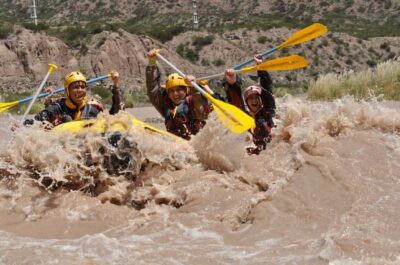
River Rafting & Canopy in the Andes Mountain Range
Read our review →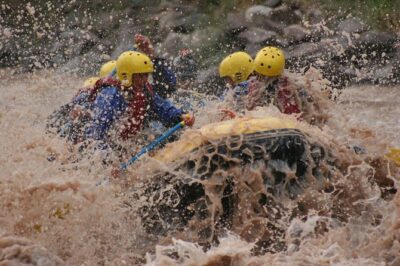
Cacheuta Hot Springs Park + Intermediate Rafting
Read our review →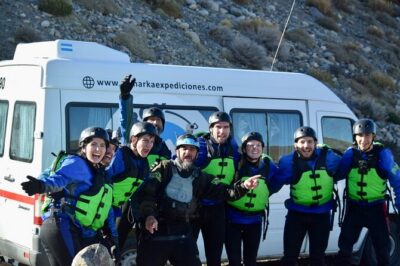
Rafting experience on the Rio de las Vueltas in Patagonia
Read our review →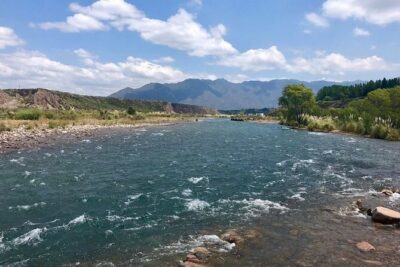
Half-Day Rafting Adventure on the Mendoza River
Read our review →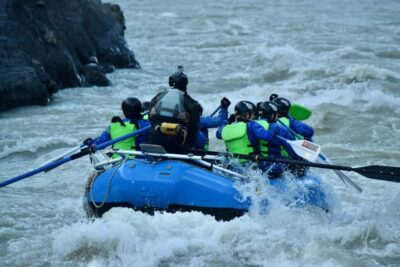
El Chalten: Rio de las Vueltas and Patagonia Rafting
Read our review →
Adventure & Flavor: Breakfast, Rafting & Asado in Mendoza
Read our review →Other lists with this river day