
Review · THAILAND RAFTING TOURS
River Kwai Jungle Rafts: 2-Day Kanchanaburi Escape from Bangkok
The most memorable part of this Kanchanaburi escape is the contrast: one day takes you through some of Thailand’s darkest wartime sites, and the next gives you a quiet morning on a floating raft beside the Kwai Noi River. Hellfire Pass brings the suffering of POWs and Asian laborers into sharp focus, while the Jungle Rafts offer a rare night away from electricity, Wi-Fi, and city noise.
I like the way the tour links the Thailand-Burma Railway Centre with the actual Death Railway train ride. I also like the long-tail boat transfers and the visit to the Mon village, two experiences that make this more than a museum visit. The main drawback is comfort: the raft has basic rooms, no electricity, and fan-only cooling, and the long journey from Bangkok includes plenty of road time.
Key points at a glance
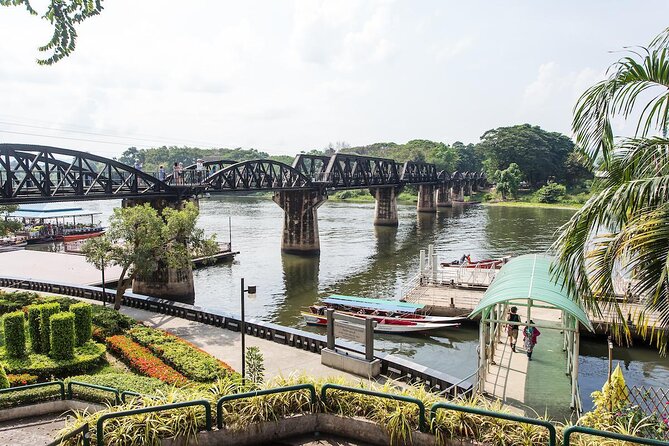
- A rare overnight on the Kwai Noi River: The floating Jungle Rafts have simple rooms, basic amenities, and no electricity or Wi-Fi.
- Serious wartime history: Visit the railway museum, River Khwae Bridge, Hellfire Pass, and sites connected with the Burma Railway.
- Three memorable ways to travel: Expect a road transfer, long-tail boats, and a train ride over the Death Railway.
- A cultural stop with real context: The Mon village visit includes a short jungle walk and a traditional Mon dance performance.
- Small groups help: The maximum group size is 15, and private departures are also available.
- Comfort needs a reality check: Heat, uneven roads, steps, boat boarding, and limited facilities make this unsuitable for some people.
Why this two-day Kanchanaburi trip works
Kanchanaburi is close enough to visit from Bangkok, but arranging the pieces yourself can be awkward. The key sites are spread out, the raft accommodation is reached by boat, and the train ride works best when connected to a wider route.
This tour handles those connections for you. You leave Bangkok around 6:00 am, ride by car, minivan, or coach, move onto local boats, spend the night on the river, and return by train and road. That makes the $209 price easier to judge. You are not paying only for entry tickets. The cost also covers transport, a professional English-speaking guide, meals listed in the program, the floating accommodation, boat rides, the train ticket, entrance fees, snacks or refreshments, and the Mon dance performance.
I would not call every expense covered. Personal drinks, tips, shopping, optional activities, insurance, and some transfer supplements cost extra. One useful detail from the meal arrangements: water at lunch may not be included, so carry cash and expect to buy drinks along the way.
The group size can reach 15 people, though the tour also runs privately. A smaller group makes boat transfers and questions easier, but the quality of the commentary depends on the guide assigned. Guides named on different departures have included Sam, Susan, Lady, and Bligh. Several have been praised for strong historical knowledge and care, while some English accents and word choices have been hard to follow.
More Two-Day Trips around Thailand:
- Chiang Mai: 2-Day Jungle Trek with Elephant Farm & Raft Ride
★ 4.7 · 881 reviews - 2 Days Khao Sok with Overnight at Cheow Lan Lake Raft House
★ 5.0 · 40 reviews - From Krabi: 2-Day Cheow Lan Lake with Overnight Raft Stay
★ 4.6 · 18 reviews
The long morning from Bangkok to Kanchanaburi
Your day starts early. Pickup is available from main hotels in central Bangkok, but the service does not automatically cover Khao San Road, Rattanakosin, Nonthaburi, Thonburi, Minburi, upper Sukhumvit from Soi 55 onward, or either international airport. Some private residences and apartment buildings are also excluded, so you may need to meet at a nearby hotel.
That detail matters. Confirm your pickup point carefully, and do not assume a Bangkok address means door-to-door service. The drive takes time, and some of the roads near the river are uneven or bumpy. The vehicles used on different departures vary, though air-conditioned cars and newer vans have been reported.
The early start is tiring, but it gives you a useful full day in Kanchanaburi. Bring a hat, high-SPF sunscreen, sunglasses, and a refillable supply of water. The sun remains strong even under cloud, and the open boat rides offer little shade.
Thailand-Burma Railway Centre and the wartime story
The Thailand-Burma Railway Centre is a good first stop because it gives you the facts before you see the bridge, the pass, and the railway itself. The interactive museum covers the construction of the railway, the prisoners held by the Japanese Imperial Army, and the severe conditions faced by both POWs and Asian laborers.
Allow about an hour. Displays include photographs, written accounts, and a model showing how prisoners were transported. The museum also keeps wartime records, and a visitor with a family connection was able to search for and print a POW record during the visit. That possibility gives this stop extra meaning if your family has a link to the railway.
A nearby war cemetery may also be included among the wartime sites visited on the route. The rows of graves are quiet and direct, without the need for much explanation. I find that the museum and cemetery work well together: one explains the machinery of the railway project, while the other shows the human cost.
Do not rush this part. The later stops are scenic and active, but the museum is where you gain the background needed to understand them.
River Khwae Bridge and the first boat ride
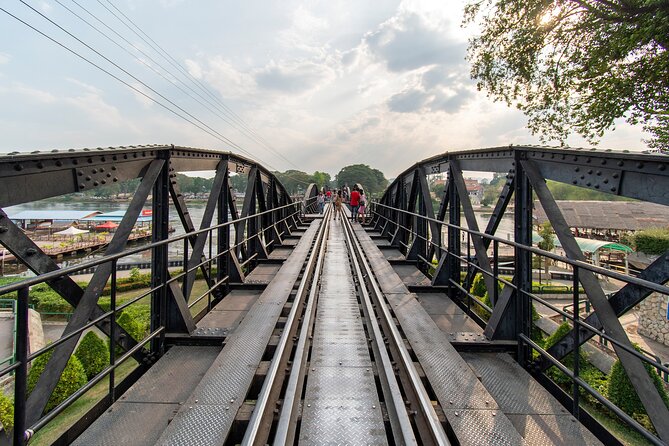
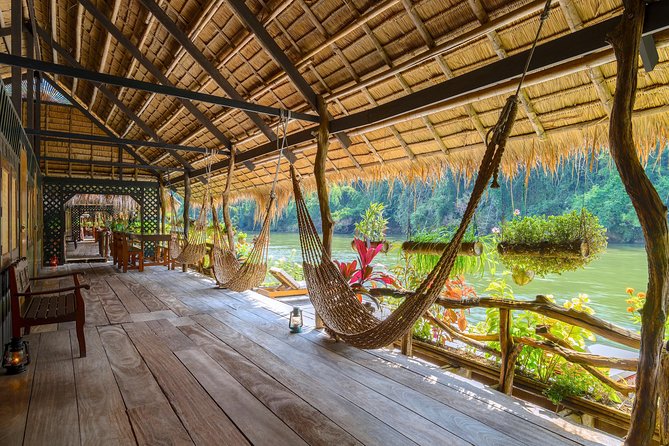
The famous bridge is a short stop, listed at about 30 minutes, so expect time for photographs rather than a long visit. It is an active railway structure, not just a monument, and the train you take later helps connect the modern route with the wartime project.
From the bridge, you board a local long-tail boat toward the Jungle Rafts. This is one of the trip’s most appealing transitions. Instead of continuing by road, you move along the river toward your overnight accommodation, with the water and wooded banks replacing traffic and buildings.
Boat boarding requires care. You may need to step down into a low craft and later climb out again, sometimes from an awkward height. The route includes several long-tail boat transfers, so people with knee, back, or mobility problems should take this seriously.
Protect your phone and camera in a waterproof bag. Spray and splashes are part of the ride, and damage caused by water is your responsibility.
More rafting trips around Thailand:
- Chiang Mai: Elephant Sanctuary, Waterfall & Bamboo Rafting
★ 4.9 · 9,160 reviews - Khao Lak: Rafting, Elephant Bathing & Sea Turtle Center Tour
★ 4.7 · 2,519 reviews - Chiang Mai Elephant Sanctuary, Bamboo Rafting and Waterfall Tour
★ 5.0 · 870 reviews - Khao Lak: Khao Sok Bamboo Rafting and Elephant Bathing Trip
★ 4.8 · 719 reviews
The Jungle Rafts: simple, atmospheric, and hot
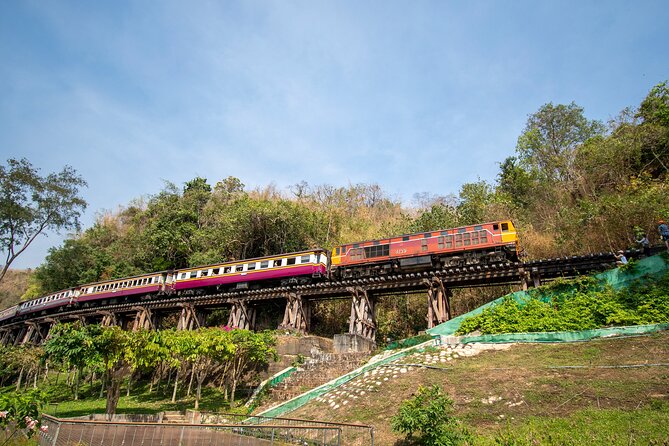
The Jungle Rafts are the heart of the experience. Rooms sit directly on the river and use basic furnishings. There is no electricity, no Wi-Fi, and potentially no hot water. Cooling may be limited to a fan, and some rooms provide handheld fans.
I like this stay because it changes the pace of the trip. After the museum and bridge, you have a place to sit beside the river, eat, and let the day settle. The lack of power is not a minor detail, though. Charge your phone, e-reader, camera, and power bank before leaving Bangkok. Download anything you might want to read or watch.
The rooms have generally been described as clean, and the staff as friendly and helpful. The food is also a strong part of the stay, with generous portions and a floating restaurant setting. Still, expect heat and humidity, especially outside the cooler months. A swim in the river may help, but you should not treat this as a cool, polished hotel.
The atmosphere is best for someone who likes simple accommodation and does not need constant connectivity. It is less suitable if air-conditioning, reliable hot water, or easy access to charging points are essential.
Hellfire Pass by boat and on foot
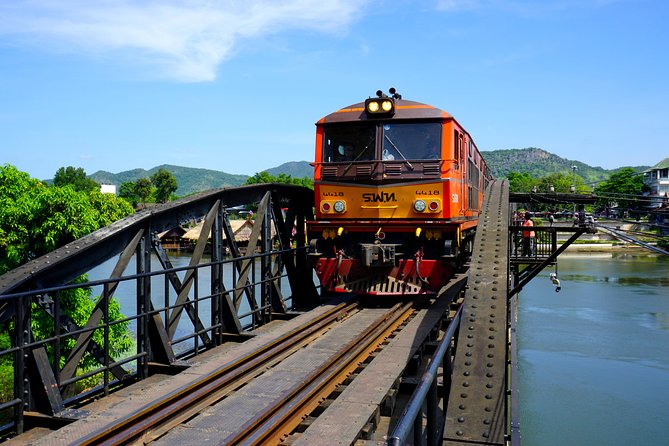
After lunch, you board a boat for Hellfire Pass and the memorial area. This is the most emotionally difficult stop, and also one of the most important.
POWs and Asian laborers cut through hard rock with hand tools, explosives, little food, and poor medical care to build a railway connection in a remarkably short time. At the pass, the scale of the cutting helps explain the physical labor in a way that photographs cannot. The quiet path and exposed rock make this a place for slow walking and reflection, not a quick photo stop.
The visit takes about 90 minutes. Wear shoes with a good grip, use sun protection, and be ready for steps, uphill walking, and uneven surfaces. The tour includes driving on rough paths and off-road roads in places, so it is not recommended for pregnant people, anyone with neck or back problems, or anyone with limited mobility.
Hellfire Pass has occasionally been closed for a public holiday or operational reason. If that happens, the replacement may not feel equal to the original site. If Hellfire Pass is central to your decision, check the operating status before committing to a non-refundable booking.
The Mon village and a quieter second morning
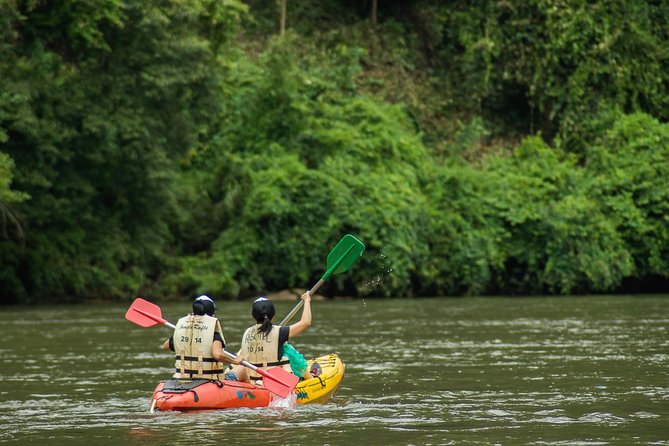
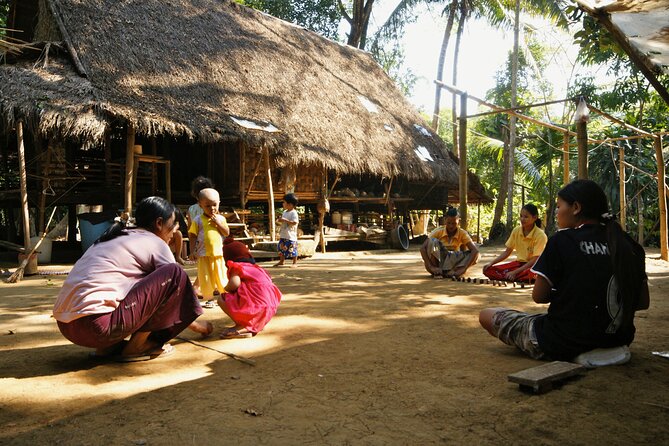
The next morning begins with breakfast and a visit to a nearby Mon village. The Mon people have lived in the area for generations, and the stop adds a cultural side to a tour otherwise dominated by wartime history.
You take a short walk into the surrounding jungle and learn about local life from the guide and community members. The visit is not a large staged attraction. Its value comes from seeing a rural setting and hearing about a culture that is part of the region today.
The traditional Mon dance performance at the Jungle Rafts adds another cultural element. It is pleasant and distinctive, though you should treat it as a brief introduction rather than a full cultural study. The tour works best when you approach the village with respect and curiosity, not as a checklist of photographs.
The timing also gives you a more relaxed morning after the first day’s long sequence of museums, roads, boats, and walking.
Riding the Death Railway back toward Bangkok
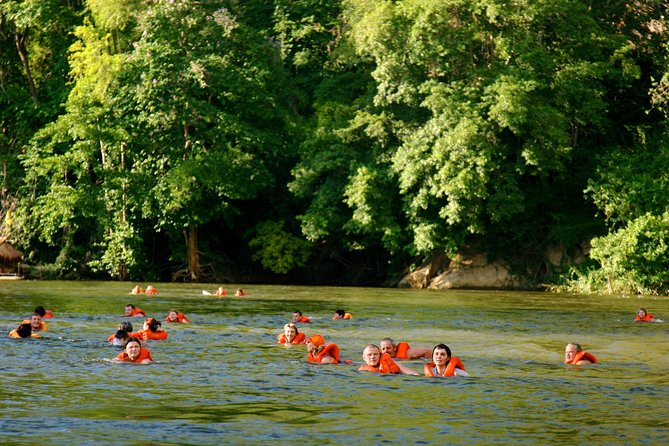
After checking out, you return by boat and continue to the local train. The train ride lasts about 90 minutes and follows the Death Railway over tracks built by POWs and Asian laborers.
This is a powerful finish because the railway is still in use. You are not simply looking at an old bridge or reading a museum panel. You are moving through the countryside on the route itself, with the earlier explanations still fresh in your mind.
Some departures have offered a train upgrade, so check exactly what your booking includes. The standard tour includes the train ticket, but any optional upgrade may cost more. The railway ride is not a luxury train experience. Its value lies in the route and its connection to the history, not in special seating or onboard service.
From the railway, you continue by road toward Bangkok. The return can feel long after two full days, but the itinerary gives you a better sense of the province than a quick day trip.
Food, guides, and the small practical details
Breakfast and lunch are included, along with the other meals specified in the program. Portions have been described as generous, and the food at the raft accommodation has received particularly strong praise. Dietary requests are considered, but they cannot always be confirmed in advance because restaurant choices and local menus vary.
Guides make a major difference. Some have given clear, passionate explanations of the war and local culture. Others have been harder to understand in English. On a shared departure, you cannot always know the final group size or guide arrangement until close to departure, so keep some flexibility.
Carry small Thai notes. You may need cash for drinks or small purchases, and larger notes can be difficult to change at the raft accommodation. Pack no more than one suitcase and one piece of hand luggage per person because transfer vehicles have limited space.
The tour is non-refundable and cannot be changed after booking. That makes date selection important, especially during hot weather or periods when Hellfire Pass may have restricted access.
Who should book this Kanchanaburi escape?
I would choose this tour if you want three things in one trip: a serious introduction to the Burma Railway, an overnight river experience, and a cultural visit that would be difficult to arrange independently.
It suits couples, families with older children, history enthusiasts, and first-time visitors who want the logistics handled. It is especially meaningful if you have a family connection to the POW story. The mix of museum, cemetery, bridge, pass, village, boats, and train gives you more depth than a simple bridge photo stop.
I would hesitate if you need air-conditioning, dependable Wi-Fi, hot showers, or an easy-access itinerary. You should also think twice if long road transfers, boat steps, uphill walks, and bumpy surfaces are difficult for you.
At $209 per person, the tour offers solid value for a two-day escape when you count the transport, guide, meals, accommodation, admissions, boats, and train ride. It is not the cheapest way to see Kanchanaburi, but it saves you from piecing together a complicated route and adds the river night that makes the trip distinctive.
Should you book it?
Book this trip if the Jungle Rafts and Hellfire Pass both appeal to you. The raft stay is simple but memorable, and the wartime sites carry real emotional weight. The Mon village and Death Railway ride keep the experience from becoming only a museum tour.
Skip it if you want a polished hotel break or a short, easy excursion from Bangkok. For the right person, though, this is one of the more meaningful ways to connect Kanchanaburi’s history with its riverside communities and countryside.
FAQ
How early does the tour start?
The stated start time is 6:00 am. Pickup is available from selected main hotels in central Bangkok.
Is accommodation included?
Yes. You stay in a shared twin or double room at the floating Jungle Rafts.
Does the raft accommodation have electricity and Wi-Fi?
No. The accommodation is basic and may have fan-only cooling, no electricity, no Wi-Fi, and no warm water.
Which meals are included?
Breakfast, lunch, and all other meals specifically listed in the program are included. Personal drinks and meals not listed are extra.
Is the Death Railway train ride included?
Yes. The tour includes a train ticket for the ride over the Death Railway. An optional upgrade may be available at an additional cost.
How large is the group?
The maximum group size is 15 people. The tour can also operate on a private basis.
Is the tour suitable for people with limited mobility?
The tour includes uneven roads, bumpy surfaces, boat boarding, steps, uphill walking, and jungle paths. It is not suitable for people with limited mobility, pregnant people, or those with neck or back problems.
New on the river around Thailand
- White Water Rafting and Waterfall Tour From Krabi★ 4.0 · 9 reviews
- 7km White Water Rafting Adventure Tour From Krabi★ 4.0 · 5 reviews
- 5 km Rafting, ATV & Zipline Tour From Krabi★ 4.0 · 10 reviews
- Full-Day Rafting and ATV Tour to Ton Pariwat from Krabi★ 3.5 · 2 reviews
- Real Adventure Tour: Whitewater Rafting and ATVs★ 3.5 · 11 reviews
- Khao Sok Rainforest | Hiking & Bamboo Rafting★ 5.0 · 35 reviews
- Phang Nga Full Day: Rafting, Temple, Waterfall + Phuket transfer★ 5.0 · 3 reviews
- Rafting and ATV Adventure in Phangnga★ 5.0 · 15 reviews
Thailand Rafting Tours, compared.
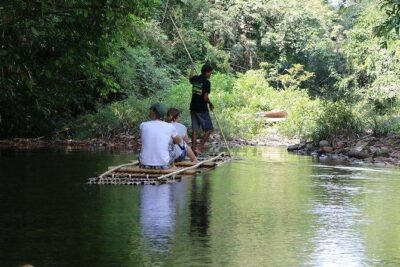
Elephant Sanctuary, Waterfall & Bamboo Rafting
Read our review →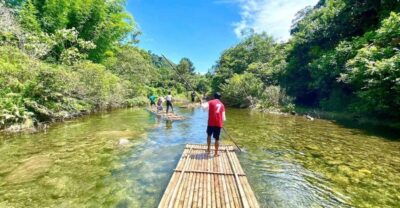
Rafting, Elephant Bathing & Sea Turtle Center Tour
Read our review →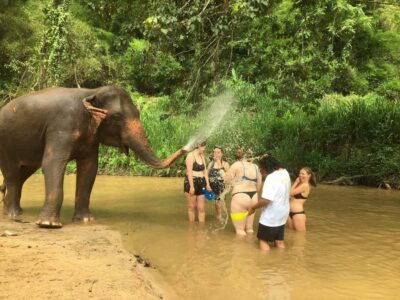
2-Day Jungle Trek with Elephant Farm & Raft Ride
Read our review →Chiang Mai Elephant Sanctuary, Bamboo Rafting and Waterfall Tour
Read our review →Khao Sok Bamboo Rafting and Elephant Bathing Trip
Read our review →Bamboo Rafting, Waterfalls, and Turtle Conservation
Read our review →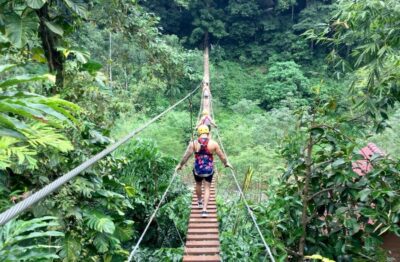
Elephant Care Experience with Rafting & Zipline
Read our review →8 hour Sticky waterfall, ATV and White water rafting Adventures
Read our review →Other lists with this river day