
Review · ITALY RAFTING TOURS
Rome: 2-Hours Rafting Experience on the Tiber River
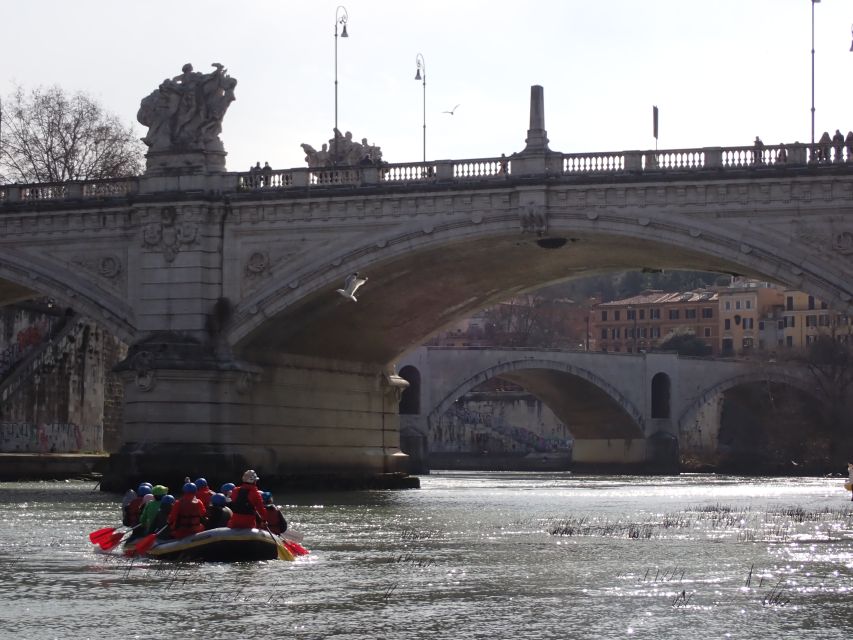
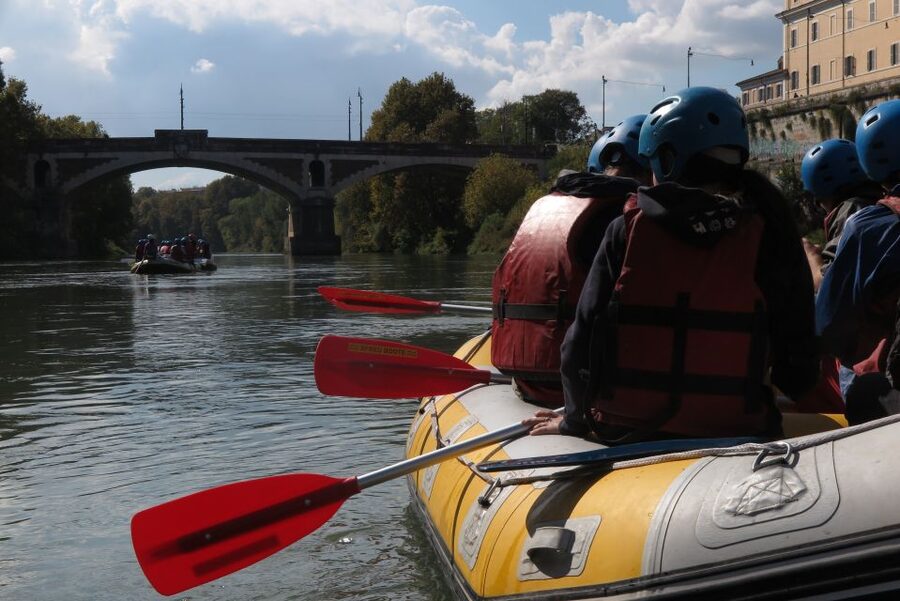
Rome’s Tiber is not just a river to look at from a bridge. On this two-hour rafting trip, you get down at water level and pass beneath old Roman crossings, modern bridges, and the stone bulk of Castel Sant’Angelo. The calm stretches let you take in the city, while the short rapids add just enough excitement to keep your paddle moving.
I like the easy meeting point, only about 50 meters from Flaminio Metro and under Porta del Popolo. I also like the unusual mix of quiet river time, Roman landmarks, and practical instruction. The main consideration is physical: you need to swim, paddle for up to two hours, climb in and out of the raft, and manage uneven ground by the river.
Key points at a glance
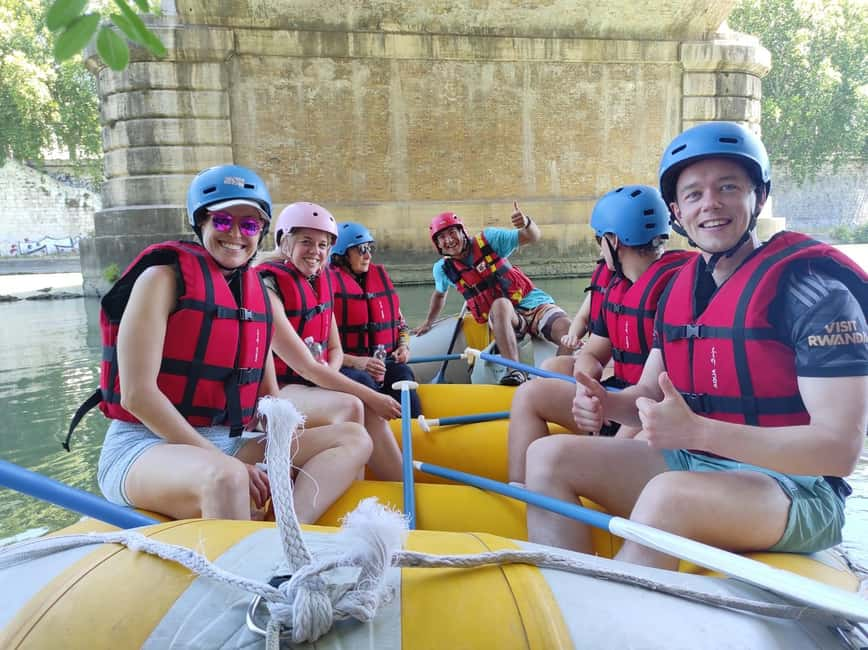
- City-center river route: Paddle from Porta del Popolo to Ripa Grande, passing major sights without leaving central Rome.
- Ancient bridge rapids: The most active water comes near Tiber Island, Ponte Garibaldi, and Pons Fabricius.
- A peaceful side of Rome: Calm stretches offer a different view of Castel Sant’Angelo, the Cupolone, and the riverbanks.
- Suitable for beginners with limits: Guides teach paddle commands, safety, and river technique, but you still need a moderate fitness level.
- Prosecco on the water: A tasting adds a distinctly Italian touch to the outing.
- Simple public transport: Flaminio Metro makes the start easy to reach from many parts of Rome.
Why rafting the Tiber is different from ordinary sightseeing
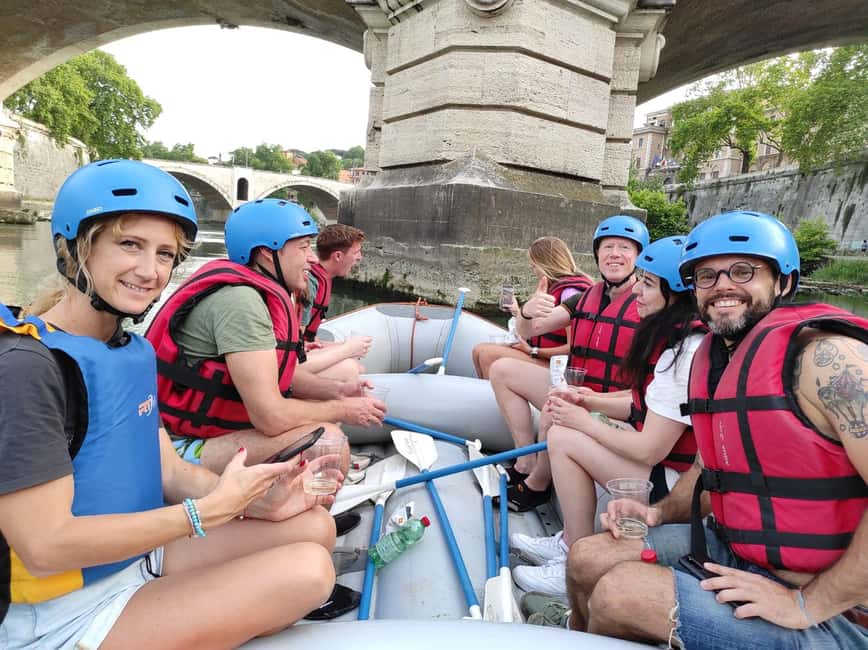
Most Rome sightseeing keeps you on streets and piazzas. This trip changes your height, pace, and point of view. From the raft, bridges become the main event. You see their undersides, stone supports, and arches before passing into open stretches where the city noise fades.
I especially like the contrast between the quiet water and the city’s grand monuments. After the group leaves the Porta del Popolo area, the route settles into a calm descent. You have time to paddle, listen to instructions, and watch Rome appear from an angle most visitors never get.
This is not a full-day white-water expedition. It is a short urban rafting experience with calm river sections and several lively passages. That makes it easier to fit into a Rome itinerary, but it also means you should set your expectations correctly. The attraction is the combination of movement, bridges, views, and a little adrenaline, not nonstop rapids.
The guides speak English and Spanish. At the start, they explain raft behavior, paddle commands, basic technique, equipment, and emergency procedures. That instruction matters, especially if you have never rafted before. You are not expected to arrive knowing how to coordinate with a boat crew.
More rafting trips around Italy:
- Rafting Family
★ 5.0 · 502 reviews - Rafting: Grand Canyon of Lao
★ 5.0 · 406 reviews - Rome: Tiber River Urban Rafting Tour with Roman Pizza
★ 4.6 · 334 reviews
Meeting at Porta del Popolo
The meeting point is under the large Porta del Popolo, formally called Porta Flaminia, near Piazza del Popolo. Flaminio Metro station on Line A is about 50 meters away, so you can reach the start without a long walk through unfamiliar streets.
Arrive at least 10 minutes before departure. That small buffer gives you time to find the instructor, handle any last-minute preparation, and listen without feeling rushed. The convenient start is one of the strongest practical features of this activity. You do not lose half the morning or evening getting out to a distant launch point.
Once assembled, you receive a life jacket, helmet, and raft. The equipment is regularly inspected and maintained. You should still dress for getting wet. Quick-dry clothing, a towel, sunglasses, a sun hat, and biodegradable sunscreen are recommended.
Wear proper footwear. Sandals, flip-flops, and bare feet are not allowed. The riverbank may involve uneven ground, and secure shoes are a sensible safety choice.
There is no dry bag included. A safe space is provided for your belongings, but bring only what you need. Leave expensive cameras, extra electronics, and anything you cannot risk getting wet at your accommodation.
The first calm stretch toward Castel Sant’Angelo
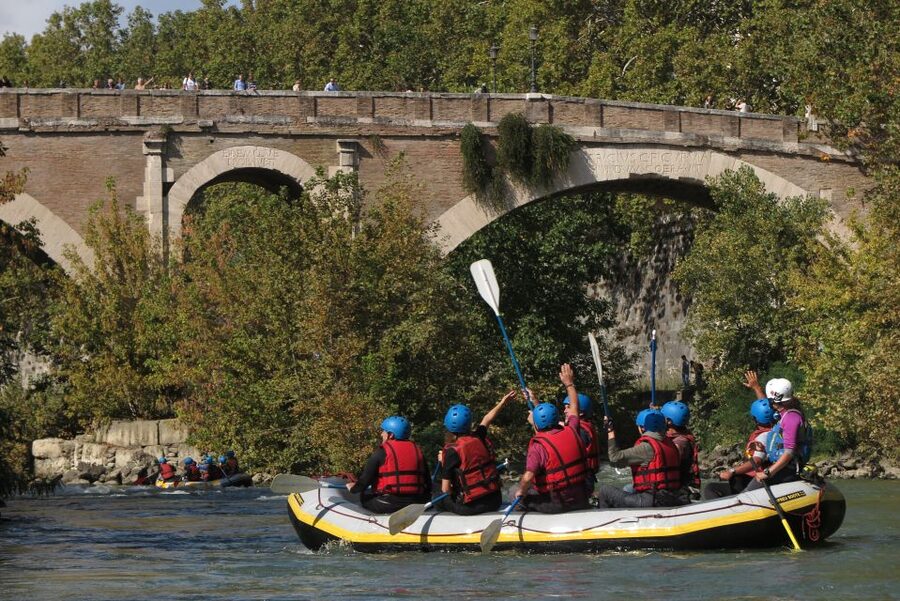
After the safety briefing and a little practice with paddle commands, the raft heads into a quieter section of the Tiber. This opening gives you time to settle into the group rhythm. Paddling works best when everyone listens and moves together, so the first minutes are as much about teamwork as sightseeing.
The river creates a useful break from central Rome’s traffic and crowds. You are still in the middle of the city, but the view from the water feels removed from the usual street-level rush. I like this part because it lets you notice the city in a slower way before the more active sections begin.
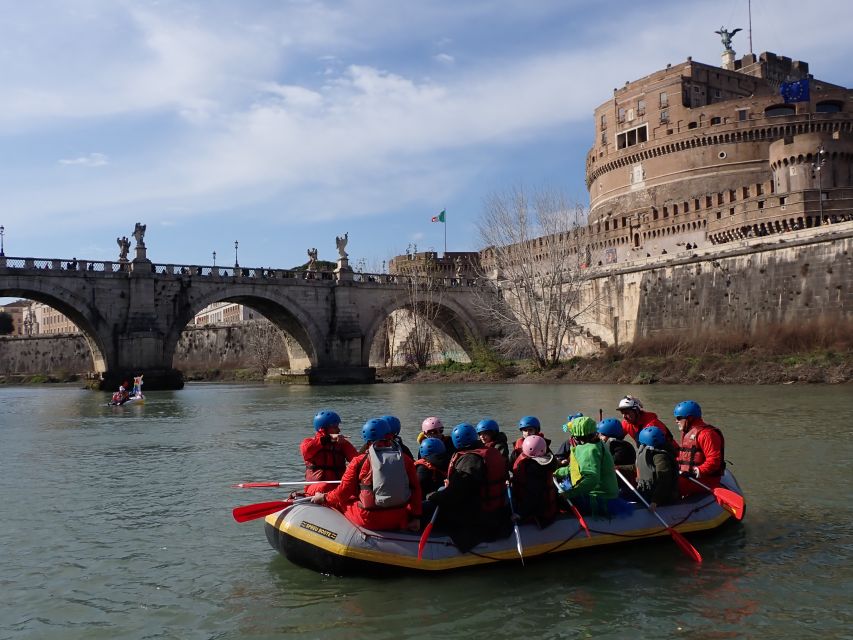
One of the big visual moments comes when Castel Sant’Angelo appears ahead. The Cupolone, the great dome of St. Peter’s Basilica, rises behind it in the distance. This pairing is especially striking from the river because the water gives you a broad, open line of sight.
The guides also add information about Rome’s past and its bridges as you go. The exact amount of commentary can depend on the pace of the group and river conditions, but the route itself gives you plenty of historical context. You are not simply paddling through scenery. You are moving through the old core of Rome.
Tiber Island and the route’s central split
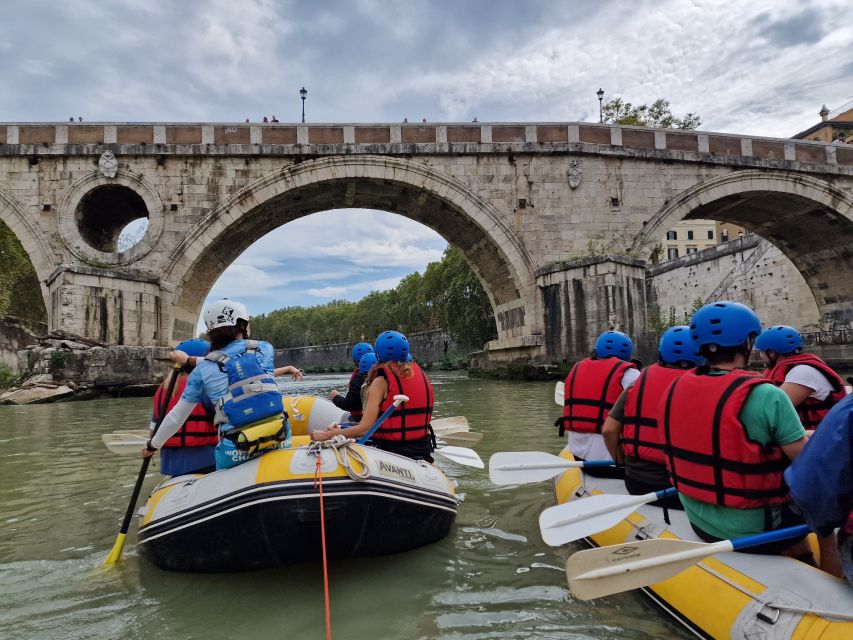
The raft continues toward Tiber Island, one of the most distinctive points on the route. Here, the river divides around the island. The route takes the left branch, while a ferry uses the right branch and stops soon after Garibaldi Bridge.
This section is useful for understanding the shape of the river and the way Rome developed around it. From street level, Tiber Island can feel like one more stop among many. From the raft, the split in the water makes its position much clearer.
The approach remains fairly calm, but you should stay alert to paddle instructions. The guides use commands to control direction and keep the raft coordinated. Beginners may find this part reassuring because it gives them practice before the busier water under the bridges.
The itinerary allows about 20 minutes for each listed section. Those time markers are useful as a rough guide, not a promise of exact timing. Water level, weather, group pace, and safety decisions can affect the progress of the trip.
Same river, a different way down:
- Rafting “Canyon”
★ 5.0 · 328 reviews - Rafting Extra
★ 5.0 · 323 reviews - Rafting Sesia
★ 5.0 · 304 reviews - River Rafting for Families
★ 5.0 · 290 reviews
The rapids under Ponte Garibaldi
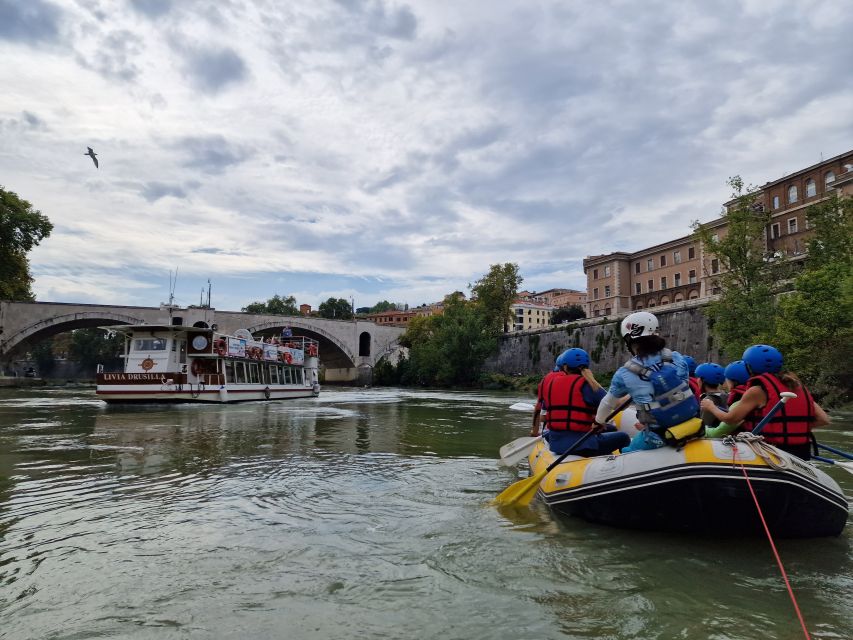
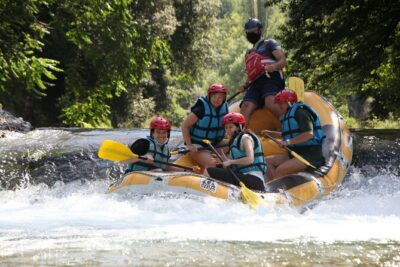
The more active part of the rafting begins near Ponte Garibaldi. Here, the water becomes livelier, and you will need to work with the rest of the raft. The short rapids are exciting without turning the outing into an extreme-sport challenge.
The key lesson is to listen. Your guide gives paddle commands and explains how to position yourself and react if the raft shifts. Teamwork, communication, and balance all matter more here than raw strength.
Ponte Garibaldi is a modern bridge by comparison with the ancient crossings farther along, which adds another layer to the route. Rome’s bridges do not all belong to one era, and seeing them in sequence makes the city’s long development easier to grasp.
This is also the point where the trip may feel less peaceful. If you want two hours of floating quietly past monuments, this is not quite that. The rapids are part of the appeal, but they bring splashing, effort, and a need for attention.
Pons Fabricius and the ancient bridge passage
Next comes Pons Fabricius, usually called Ponte Fabricio. It is one of Rome’s ancient bridges and one of the route’s most memorable crossings. The raft passes below its stone arches, giving you a close view that is hard to get from the roads above.
The bridge is more than a photo backdrop. Its age and construction make the passage feel connected to the city’s earliest surviving river crossings. From a raft, you notice the weight of the masonry and the low sweep of the arches in a way you might miss while hurrying across on foot.
The water below the bridge includes another lively section. You will use the skills introduced at the start, paddling together and following the guide’s directions. If you are a first-time rafter, this is where the initial briefing proves its value.
The route is suitable for several experience levels, but suitable does not mean effortless. You need enough fitness to paddle for up to two hours, maintain balance, and get in and out of the raft. People with back, heart, mobility, or recent surgery concerns should not book this activity. It is also not intended for children under 12, non-swimmers, people with epilepsy, or anyone with a low level of fitness.
Ponte Rotto and the final run to Ripa Grande
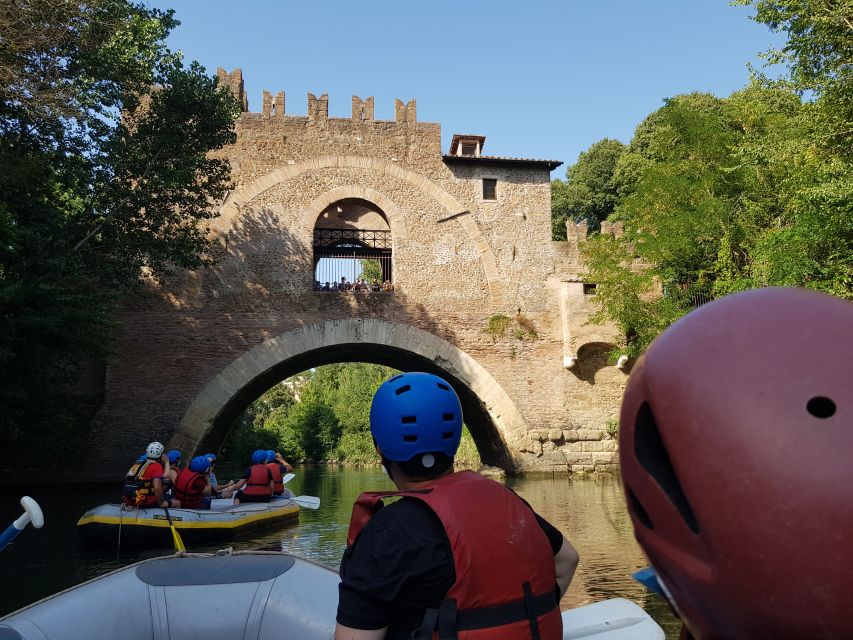
The raft then passes beneath the only remaining arch of Ponte Rotto. The name means Broken Bridge, and its partial form gives the crossing a very different look from the intact bridges earlier in the route.
This is one of the most unusual sights on the trip. You are not just passing under a complete bridge and moving on. The damaged structure shows how the river, floods, repairs, and centuries of change have shaped Rome’s built environment.
From there, the route continues toward Ripa Grande on the right bank. The trip ends at the former port area, giving the journey a clear finish rather than simply stopping at an arbitrary point. By then, you will have passed through several distinct sections of the river, from calm water near the start to rapids around the old bridges.
The full experience lasts about two hours. That is long enough to feel like a real activity, but short enough to fit around a museum visit, dinner, or an evening walk. The activity information also presents it as a night option, so check the available departure time if seeing Rome after dark is important to you.
The Prosecco stop and the Rome-at-night angle
A Prosecco tasting is included. It gives the outing a social, distinctly Italian finish and adds a pause from the physical work of paddling. You can sip the sparkling wine while taking in the river views.
The evening setting may be the most atmospheric version of this trip. Bridges, monuments, and the river take on a different character after sunset. At the same time, night conditions can affect visibility and weather comfort, so bring clothing suited to the forecast and follow the operator’s safety decisions.
The supplied information does not name individual guides, so I cannot tell you to expect a particular instructor. You can expect an English- or Spanish-speaking professional guide who handles the safety briefing, paddling instruction, route leadership, and historical commentary.
What the $93 price gets you
At $93 per person, this is not a cheap way to move around Rome. You are paying for a guided activity, safety equipment, instruction, river access, sightseeing, and the Prosecco tasting. The value depends on what you want from your time in the city.
I think the price makes more sense if you have already seen Rome’s main sights or want an active break from churches, museums, and archaeological sites. You are buying an experience, not simply transport or a viewpoint. The river-level perspective is the part that gives the outing its value.
The easy start also saves time and effort. With Flaminio Metro so close, you can get to the meeting point without arranging a long transfer. That matters in Rome, where a distant pickup can turn a two-hour activity into half a day.
The main limitation is the short length of the most exciting water. If you are an experienced white-water rafter looking for sustained rapids, you may find the route too gentle. If you want a novel way to see central Rome and do not mind paddling, the balance is more appealing.
Who should book this Tiber rafting trip
I would suggest this experience to active visitors aged 12 and above who can swim and feel comfortable with moderate physical effort. It suits couples, friends, and families with older children who want something different from a standard city tour.
It is also a good fit if you enjoy learning by doing. You practice communication, balance, paddle technique, and river awareness while moving past important Roman landmarks. The guides adapt to different ability levels, but everyone still needs to take part.
I would not choose it for a relaxed sightseeing day, a person with mobility limits, or anyone who dislikes getting wet and working with a group. Medical restrictions are important here. Rafting can be demanding, and you should ask your doctor if you are unsure about your ability to take part.
Weather and water conditions can change the plan. The operator may cancel or reschedule if conditions are unsafe. That is sensible for a river activity, so avoid placing this tour immediately before a flight or another booking you cannot change.
Should you book it?
Book this rafting trip if you want to see Rome from river level, enjoy a manageable dose of adventure, and value easy logistics. The best parts are the view of Castel Sant’Angelo and the Cupolone, the passage beneath ancient bridges, and the calm feeling of being in the city without standing in a crowd.
Skip it if you want serious white-water rafting or cannot meet the swimming and fitness requirements. For everyone else, the $93 cost is reasonable when you treat it as a guided sightseeing experience with an active twist, not as a pure sports excursion. Bring secure shoes, quick-dry clothes, and a towel, then arrive early enough to hear every safety instruction.
FAQ
Where does the rafting tour start?
It starts under Porta del Popolo, also known as Porta Flaminia, near Piazza del Popolo. The meeting point is about 50 meters from Flaminio Metro station on Line A.
How long does the experience last?
The rafting experience lasts approximately two hours. The route includes several sections of about 20 minutes each, though timing can vary with river and weather conditions.
Which landmarks will I see?
You will pass Castel Sant’Angelo, the Cupolone, Tiber Island, Ponte Garibaldi, Pons Fabricius, Ponte Rotto, and Ripa Grande.
Are there rapids on the Tiber route?
Yes. The route includes rapids near Ponte Garibaldi and Pons Fabricius, along with calmer stretches of water.
Is this activity suitable for beginners?
Yes, guides provide safety instructions, paddle commands, equipment guidance, and basic river techniques. Participants still need moderate fitness, balance, agility, and the ability to swim.
What languages do the guides speak?
The guides speak English and Spanish.
What should I bring?
Bring sunglasses, a sun hat, a towel, biodegradable sunscreen, and quick-dry clothing. Wear secure shoes because sandals, flip-flops, and bare feet are not allowed.
Is a dry bag included?
No. A dry bag is not included, but the operator provides a safe place to store belongings.
Can I cancel the booking?
You can cancel up to 24 hours before the activity for a full refund. The reserve-now, pay-later option lets you book without paying immediately.
New on the river around Italy
- 3 Hours of Super Rafting in Cassino★ 5.0 · 3 reviews
- 2 hours of Rafting Power on the Gari River in Cassino★ 5.0 · 7 reviews
- 2 Hours of Guided Soft Rafting in the Gari River in Cassino★ 5.0 · 5 reviews
- Rafting on the Arno River in Florence under the Arches of Pontevecchio★ 5.0 · 45 reviews
- “Stop & Go” rafting★ 5.0 · 13 reviews
- Rafting “Experience 2 days”★ 5.0 · 22 reviews
- Raft pack★ 5.0 · 34 reviews
- Soft Rafting on Adda River★ 5.0 · 10 reviews
Italy Rafting Tours, compared.
Tiber River Urban Rafting Tour with Roman Pizza
Read our review →
Other lists with this river day