
Review · ROTORUA RAFTING TOURS
Rotorua Rafting: Kaituna River Rafting Experience-Free Sauna
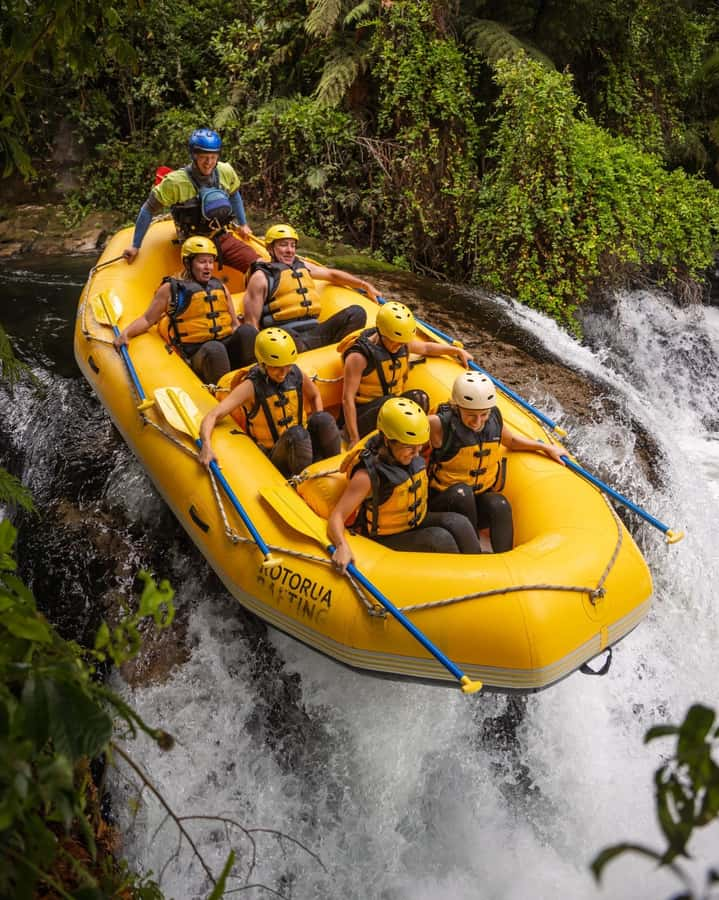
The Kaituna River packs a surprising amount of action into a short run: 14 rapids and three waterfalls, including a 7-metre drop widely described as the highest commercially rafted waterfall on earth. You get a real whitewater rush, but clear instruction and a raft guide keep the experience friendly for first-timers.
I especially like the chance to leave the raft for a swim or a smaller waterfall slide, and the free wood-fired sauna waiting at the end. The main consideration is simple: this is active, wet, and physical. Children under 10 cannot join, and anyone who dislikes cold water, sudden drops, or following shouted paddle commands may prefer a calmer Rotorua outing.
Key points before you book
- Three waterfalls in one short river run: The headline is the 7-metre drop, but smaller falls and rapids keep the action moving between the big moments.
- A strong first rafting trip: Guides such as Lucas, Jack, Peach, Justin, and George are praised for clear instructions, humor, and steady support.
- Swimming is part of the fun: You may jump, swim, surf, and move through a smaller rapid outside the raft.
- Warm water in summer: At about 25 degrees Celsius, the Kaituna can be the warmest river in New Zealand during the summer months.
- Sauna included: Wetsuits and booties are supplied, then the wood-fired sauna gives you a useful warm-up after the river.
- Family rules matter: Children aged 10 to 12 raft below the Grade 5 waterfall and join the group halfway through the run.
Why the Kaituna River is such a good Rotorua adventure
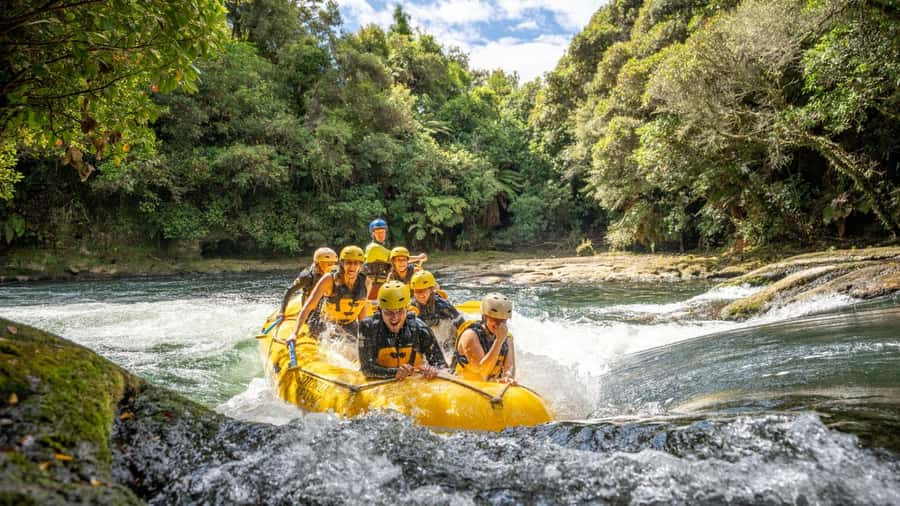
Rotorua has no shortage of outdoor activities, but Kaituna River rafting gives you something quite different from a scenic walk or a geothermal stop. You are not simply looking at the river. You are sitting in it, paddling through it, and dropping over its waterfalls with a guide calling the next move.
The trip suits beginners because you do not need previous rafting experience. The guides teach you what to do before you reach the river, then repeat the commands as the water gets faster. That matters more than fancy equipment. In a raft, good timing and calm instructions make the difference between an exciting run and a confusing one.
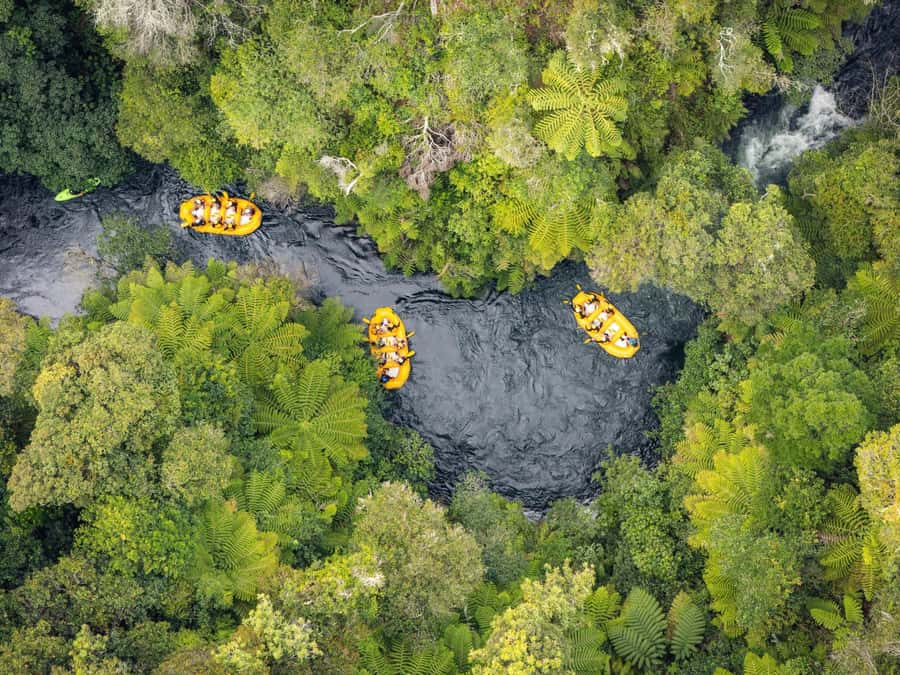
The setting also adds plenty. The river cuts through a green forested area, and the clear water gives the run a more natural feel than a purpose-built amusement ride. You get the thrill of whitewater, but you are still moving through a real New Zealand river corridor.
The activity has a 4.9 rating from 401 reviews, and the praise is unusually consistent around three points: safety, guide quality, and fun. That does not mean every moment will feel easy. It means the operation appears well set up to help nervous beginners handle the difficult parts.
More rafting trips around New Zealand:
- Rotorua Rafting: Kaituna River White Water Rafting & Free Sauna
★ 5.0 · 1,952 reviews - Waitomo Caves: Labyrinth Black Water Rafting Experience
★ 4.9 · 1,673 reviews - White Water Rafting – Kaituna Cascades, The Originals
★ 5.0 · 1,274 reviews
Getting to the base from central Rotorua
The rafting base is about a 20-minute drive from central Rotorua. You need to arrange your own transport unless you request a shuttle from Rotorua, so allow time for the drive and check the pickup details when booking.
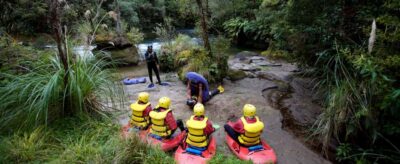
The setup is straightforward. You meet your guide at the base, change into the supplied wetsuit and booties, and collect your safety equipment. Bring swimwear to wear underneath and a towel for afterward. You do not need to bring rafting clothing or specialist gear.
The river is just across the road from the rafting company. That short transfer keeps the experience efficient: you do not spend half the session on a long bus ride before the adventure begins. It also means you can return to the base quickly after the river run, change, look at the photographs, and use the sauna.
The full activity lasts about two hours, with roughly an hour of action on the water. The rest covers changing, instruction, safety checks, getting to the river, and returning to the base. That is a useful distinction if you are planning several activities in one day. This is a compact outing, not an all-day expedition.
Your briefing, wetsuit, and first paddle commands
Before you launch, the guide explains the equipment and teaches you the basic commands. You learn how to paddle, when to stop, and how to respond as the raft approaches a rapid or waterfall.
That briefing is especially valuable if you feel nervous. Several people arrive worried about being too old, too large, inexperienced, or simply not adventurous enough. The rafting team’s job is to turn the river into a set of clear instructions rather than one giant wall of white water.
You will need to listen closely. Rafting is a group activity, so your timing affects everyone in the boat. If the guide says to paddle forward, paddle forward. If the command changes, change with it. The experience is more enjoyable when you treat the instructions as part of the sport instead of trying to guess what happens next.
Non-swimmers can take part, according to the activity information. You still need to tell the team if you are uncomfortable in water, and you should expect to get wet. The supplied wetsuit and safety equipment help, but they do not remove the basic demands of a river trip.
The guides receive the strongest praise here. Lucas, Jack, Peach, Justin, George, Josh, Nathan, Ethan, Sam, Riley, and others are singled out for being funny, patient, clear, and reassuring. Individual guide assignments can change, but the practical takeaway is that the staff are used to helping first-timers find their confidence.
Fourteen rapids, three waterfalls, and the famous 7-metre drop
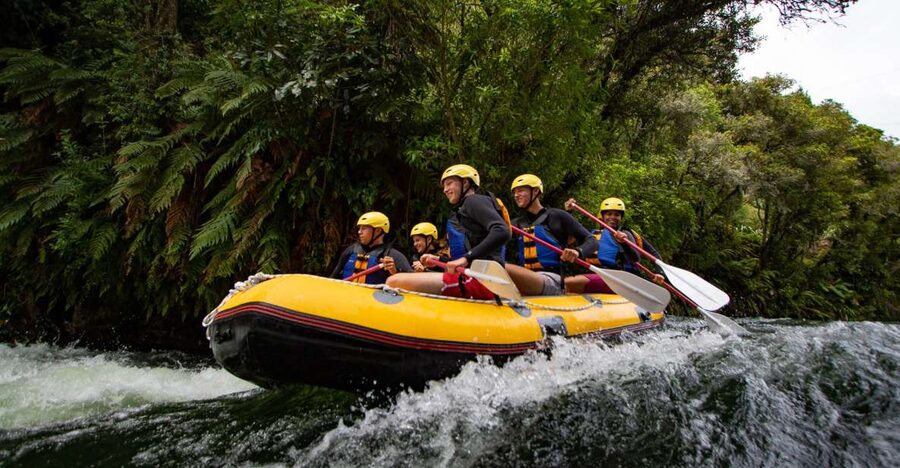
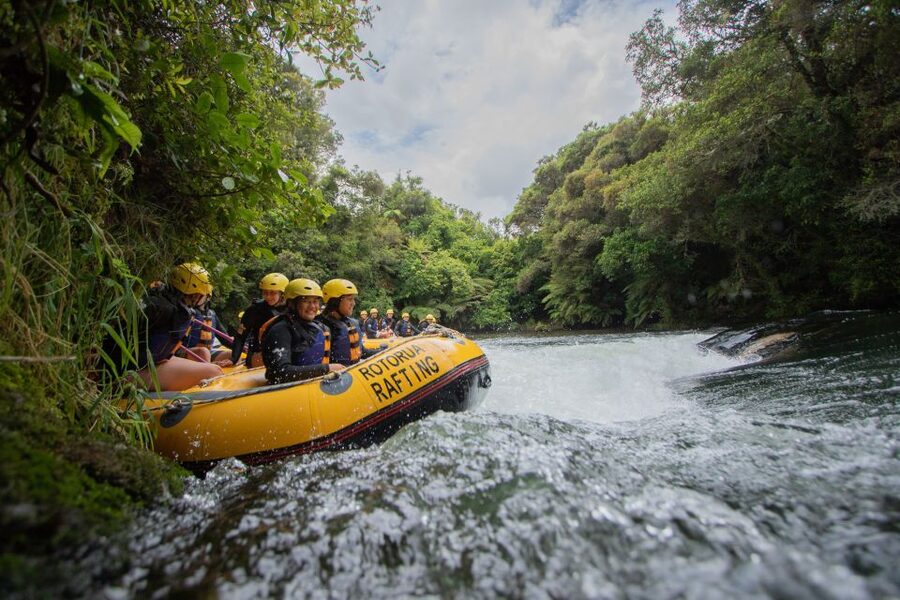
Once you cross the road to the river, the pace changes quickly. The run includes 14 rapids and three waterfalls, so you get repeated bursts of action rather than one dramatic moment followed by a long quiet stretch.
The smaller rapids help you settle into the rhythm. You paddle, listen, brace, and learn how the raft responds. Between the rougher sections, the guide may offer a chance to try something different, such as jumping into the water, swimming a short section, or moving through a smaller rapid outside the raft.
Those extras are one of the best features of the trip. You are not stuck in the boat for the entire hour. The chance to swim or jump gives you a closer feel for the river, while the guide controls when and where it is suitable. The water can be clear and pleasantly warm in summer, though conditions and personal comfort will vary.
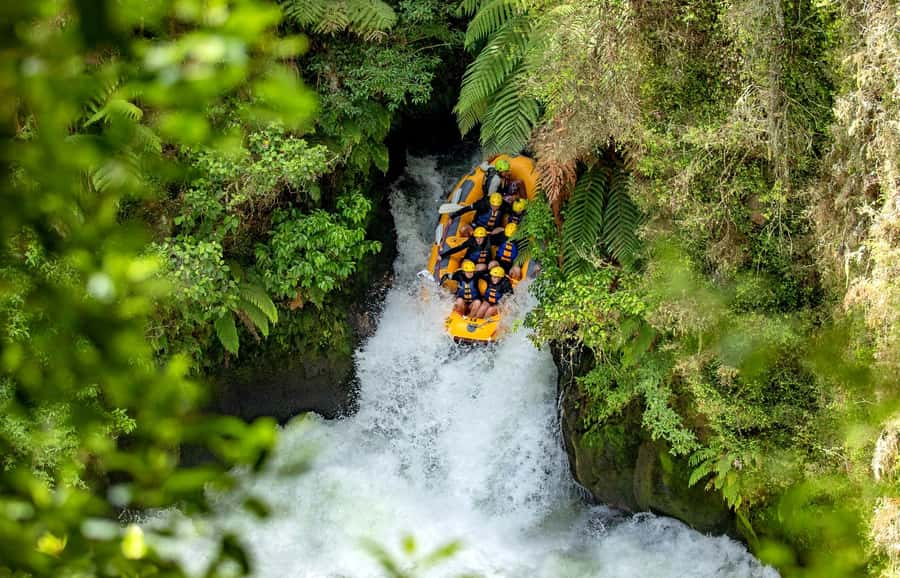
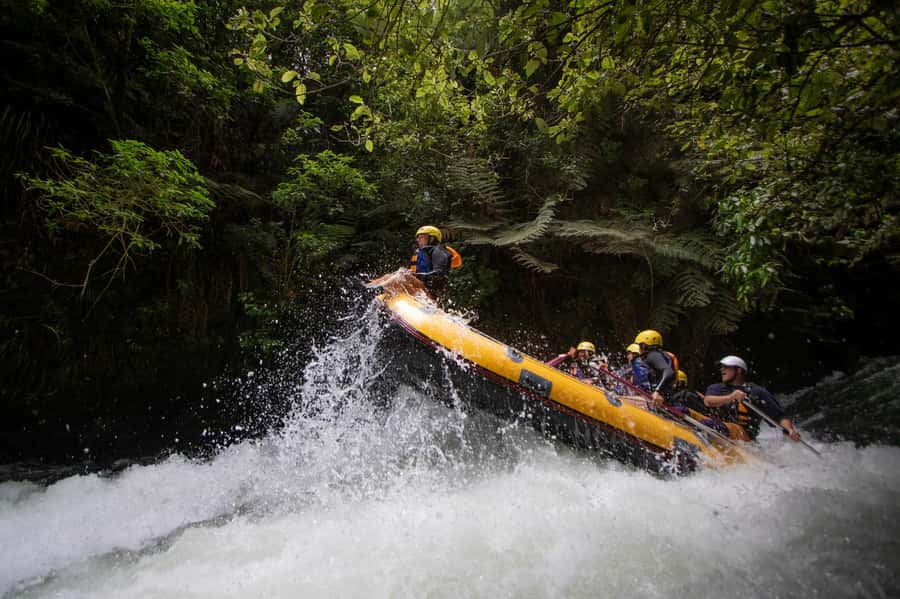
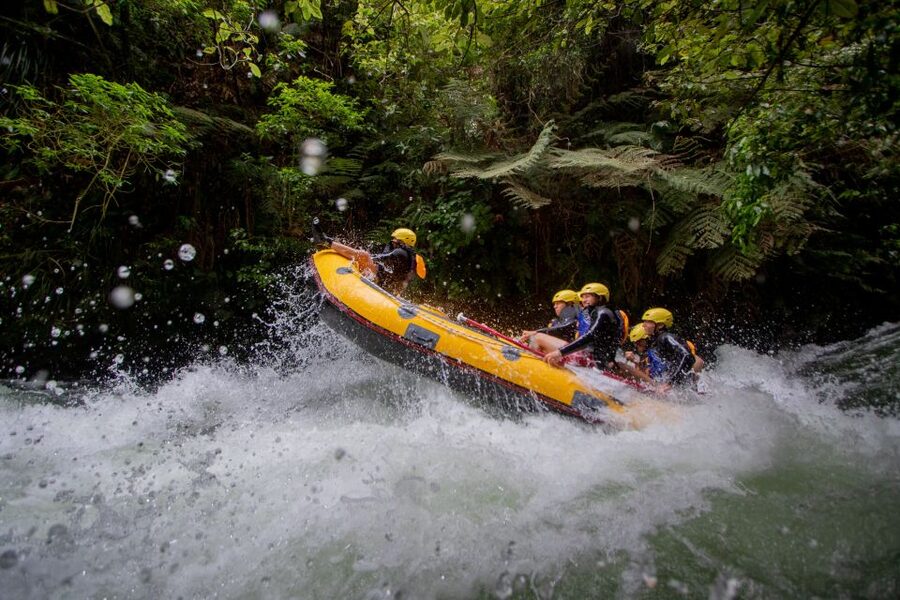
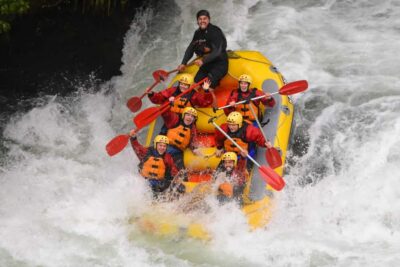
Then comes the major drop. The 7-metre waterfall is the part most people picture when they book this activity. It looks daunting from the raft, and that is exactly why the instruction beforehand matters. You follow the guide’s commands, hold on securely, and let the raft do its work.
This is not a gentle float with a small splash at the end. The big fall brings a real adrenaline hit. At the same time, the run is designed for people who may never have rafted before. The guides can offer more daring or gentler options in some sections, which helps mixed groups enjoy the same outing without everyone needing the same level of nerve.
There is also a possibility of an unexpected moment. A raft can stall or flip, as one family group experienced at the tallest drop. The wider team supported the group and helped them continue. That story is a useful reminder that whitewater rafting involves genuine water-sport risks, even when professionally guided. Follow the safety instructions, stay alert, and accept that the river will not always behave exactly as planned.
Same river, a different way down:
- Rafting Rotorua: Kaituna River White Water Experience
★ 4.9 · 1,274 reviews - Rafting Rotorua Kaituna White Water Rafting | Kaitiaki Adventures
★ 5.0 · 759 reviews - Kaituna River White Water Rafting from Rotorua
★ 5.0 · 388 reviews - Black Water Rafting Experience Waitomo Caves Tour
★ 5.0 · 362 reviews
What families and nervous beginners should know
The minimum age is 10. Children aged 10 to 12 do not raft the section below the Grade 5 waterfall. Instead, they walk with the photographer to the halfway point and join the raft there.
That rule makes this a possible family activity, but it is not the same experience for every age group. A family with children aged 10, 13, and 16 can expect the youngest child to miss the largest waterfall section. If the main goal is for everyone to share the 7-metre drop, this is not the right setup.
The activity can work well for adults who are uncertain about their fitness or rafting ability. One participant who was 58 and overweight described worrying about slowing down the raft, but found the guide supportive and the trip enjoyable. Another larger participant had a good experience too. The stated weight limit is 287 pounds, or 130 kilograms, so check this before booking.
You should not join if you are pregnant, and children under 10 are not permitted. The trip is also not suitable for anyone who cannot manage the physical demands of wearing a wetsuit, paddling, holding on, and entering the water.
A nervous attitude is not automatically a problem. In fact, the guides are used to helping people who feel scared at the start. The better question is whether you can listen carefully and accept the physical nature of the activity.
The river scenery and the moments between rapids
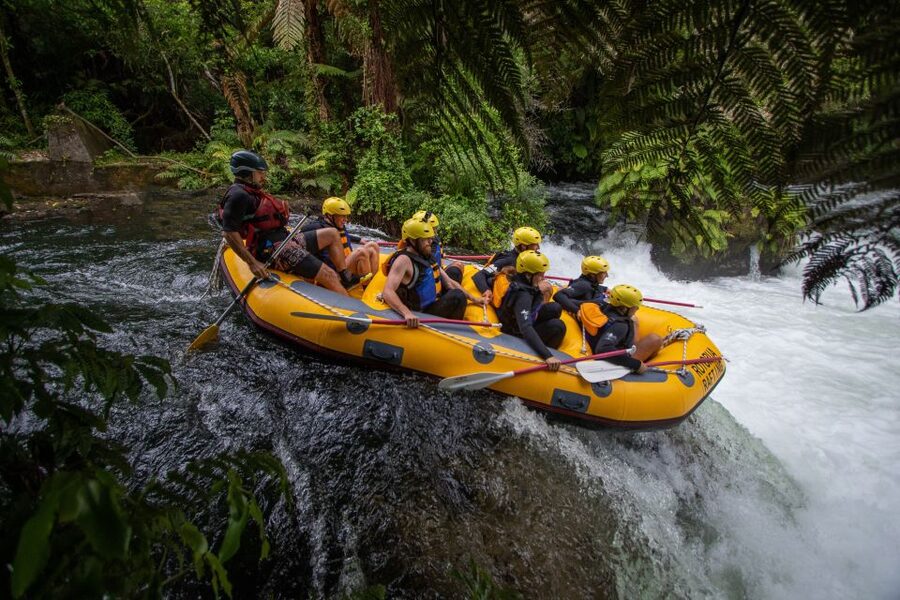
It is easy to focus only on the falls, but the river scenery deserves attention. The forest and clear water give you a sense of place between the rapids, and the changing pace lets you notice more than you would from a roadside viewpoint.
The swim sections can be especially memorable. You may see the river from water level, feel the current pull you along, and then climb back into the raft for the next command. Those transitions make the trip feel varied rather than like a series of identical drops.
Summer water temperatures are listed at about 25 degrees Celsius, making the Kaituna the warmest river in the country during that season. Some people still find the water refreshingly cold, particularly after a splash or under changing weather, so do not assume warm-season conditions will feel tropical. The wetsuit is useful even when the air is warm.
The natural setting also provides a good balance to the adrenaline. This is not just a speed test. You get a view of the river corridor that you cannot have from a normal Rotorua day tour, with the added fun of being part of the movement.
The sauna, changing facilities, and optional photos
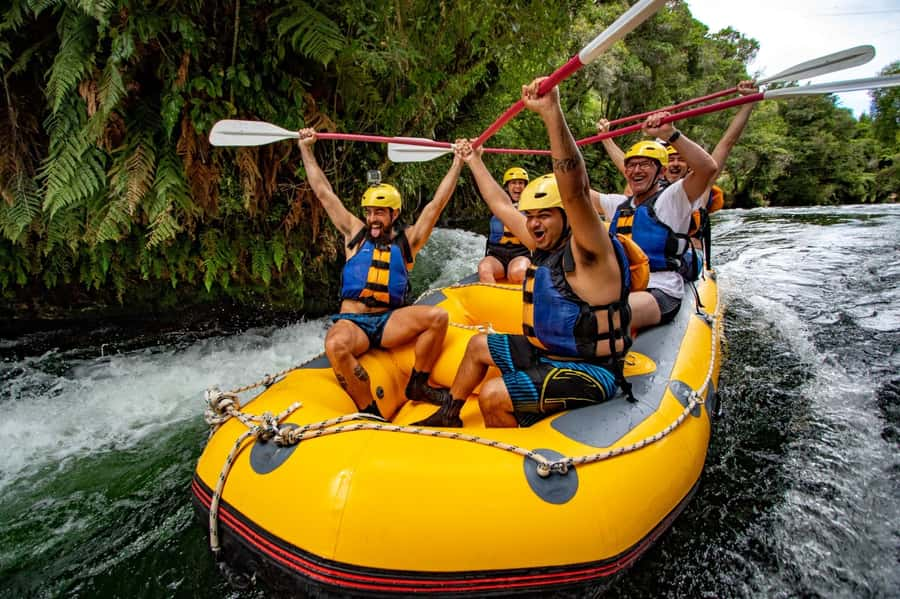
After about an hour on the water, you return to the base, change out of the wetsuit, and have time to look at the photographs taken during the run. The free wood-fired sauna is included, and it is more than a decorative extra. After a wet activity, a warm room is a practical comfort, especially if the weather turns cool.
Bring a towel. You will also want dry clothes for the trip back into Rotorua. The sauna can help you warm up, but it does not replace a towel or a change of clothing.
Photos are optional and cost extra. Recent bookings have described a photo package at about $40, and the pictures can capture expressions and moments that are hard to remember clearly after a waterfall drop. I would treat them as a personal choice. If you are traveling with family or doing this as a major New Zealand milestone, they may be worth the added cost. If you are watching your budget, the rafting itself is the important part.
Is $74 a good value?
At $74 per person, the price is strong for a two-hour guided activity that includes wetsuit hire, booties, safety equipment, instruction, the river run, and the sauna. You are not paying separately for basic clothing or for a long transfer to the river.
The value is best if you want a concentrated adventure. The active river time is about an hour, not two full hours, so do not compare the price with a full-day rafting trip. Compare it with other short Rotorua activities and consider how much equipment and professional supervision are included.
The price also works well for a family group, provided everyone meets the age and weight rules. Remember to add the cost of transport if you need the shuttle, and optional photos if you want them. Hotel pickup and drop-off are not included.
Free cancellation up to 24 hours before the activity and reserve-now, pay-later booking can help if your North Island schedule is still moving around. Check current availability and start times, since the two-hour duration does not mean you can arrive at any time.
Who should book this Kaituna rafting trip?
I would choose this for you if you want a real thrill without needing previous rafting experience. It is a particularly good fit for first-timers, active families with children aged 10 and older, solo visitors who are comfortable joining a group, and anyone who wants more than a sightseeing stop in Rotorua.
I would also recommend it if you are nervous but curious. The guides receive repeated praise for making people feel safe while keeping the run exciting. A calm guide, clear commands, and the option of different levels of participation make a difference.
I would think twice if you want a quiet river outing, dislike getting wet, or have limited mobility that makes paddling and holding on difficult. The experience is approachable, but it is still whitewater rafting, with waterfalls, fast water, and a genuine physical element.
FAQ
How long does the Rotorua rafting experience last?
The activity lasts about two hours, including preparation and changing. The active river portion takes about one hour.
How far is the rafting base from central Rotorua?
The base is about a 20-minute drive from central Rotorua. A shuttle from Rotorua can be arranged on request, but hotel pickup and drop-off are not included.
Do I need previous whitewater rafting experience?
No. The guides provide instruction before you enter the river, and the activity is designed for beginners. Non-swimmers can also take part according to the activity information.
What age must children be to join?
Children must be at least 10 years old. Children aged 10 to 12 raft below the Grade 5 waterfall, walk with the photographer to the halfway point, and join the raft there.
What should I bring?
Bring swimwear and a towel. Wetsuits, booties, and safety equipment are provided.
Is the sauna included in the price?
Yes. A free wood-fired sauna is included after the rafting experience. Optional photographs cost extra.
New on the river around New Zealand
- Hanmer Springs Rafting and Quad Bike combo★ 5.0 · 14 reviews
- Black Water Rafting Semi Private Tour from Auckland★ 5.0 · 2 reviews
- Black Labyrinth: Black Water Rafting – Private Tour from Auckland★ 5.0 · 8 reviews
- Te Awa Kairangi Grade 2 Scenic Rafting Tour★ 4.8 · 10 reviews
- Rotorua Sledging: Kaituna White Water River Board Experience★ 4.8 · 36 reviews
- Rotorua: Tarawera River Raft and Kayak Adventure★ 5.0 · 2 reviews
- Rotorua: Kaituna Rafting & Mt. Tarawera Guided Hike Combo★ 4.5 · 11 reviews
- Rangitaiki Rafting Grade 3-4★ 4.7 · 16 reviews
Rotorua Rafting Tours, compared.
Rotorua Rafting: Kaituna River White Water Rafting & Free Sauna
Read our review →
Rafting Rotorua: Kaituna River White Water Experience
Read our review →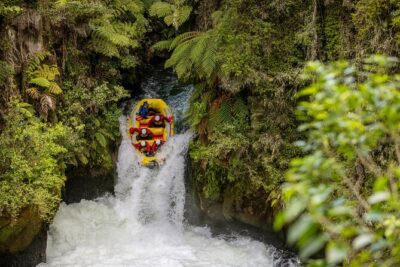
Rafting Rotorua Kaituna White Water Rafting | Kaitiaki Adventures
Read our review →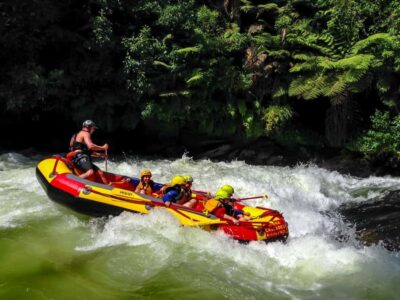
Kaituna River and Tutea Falls Whitewater Rafting
Read our review →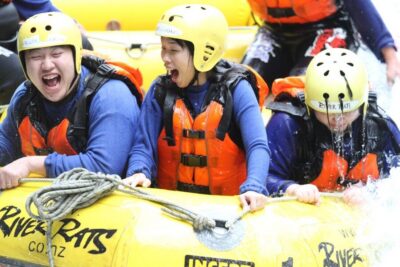
Rotorua Sledging: Kaituna White Water River Board Experience
Read our review →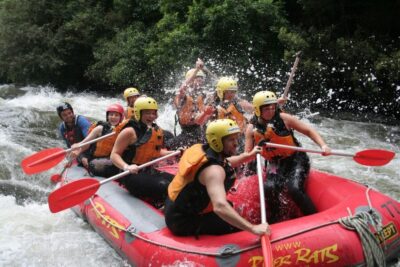
Kaituna Rafting & Mt. Tarawera Guided Hike Combo
Read our review →Other lists with this river day