
Review · QUEENSTOWN RAFTING TOURS
Queenstown: White Water Surfing Along the Kawarau River
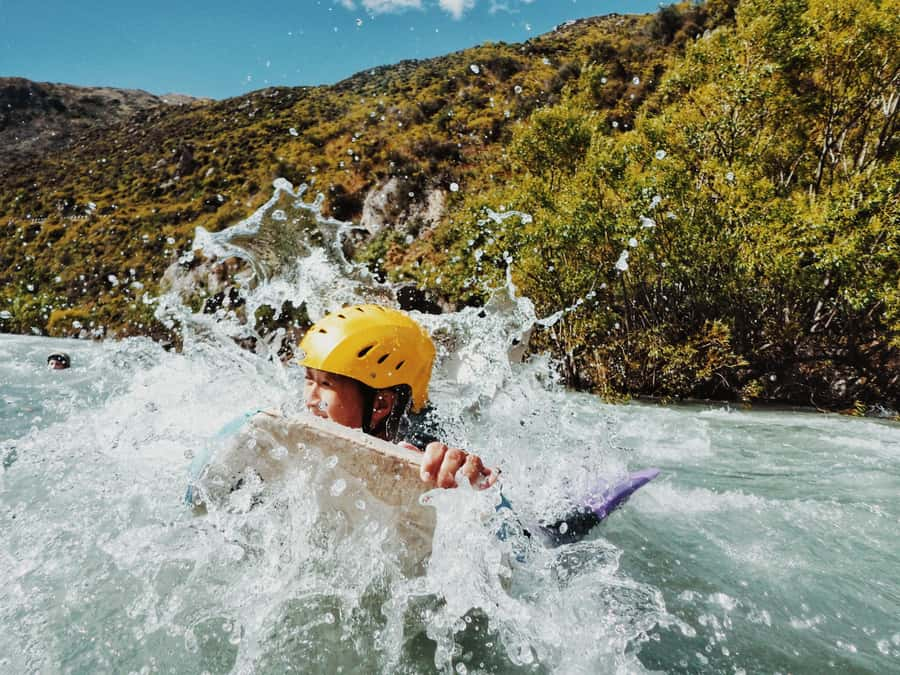
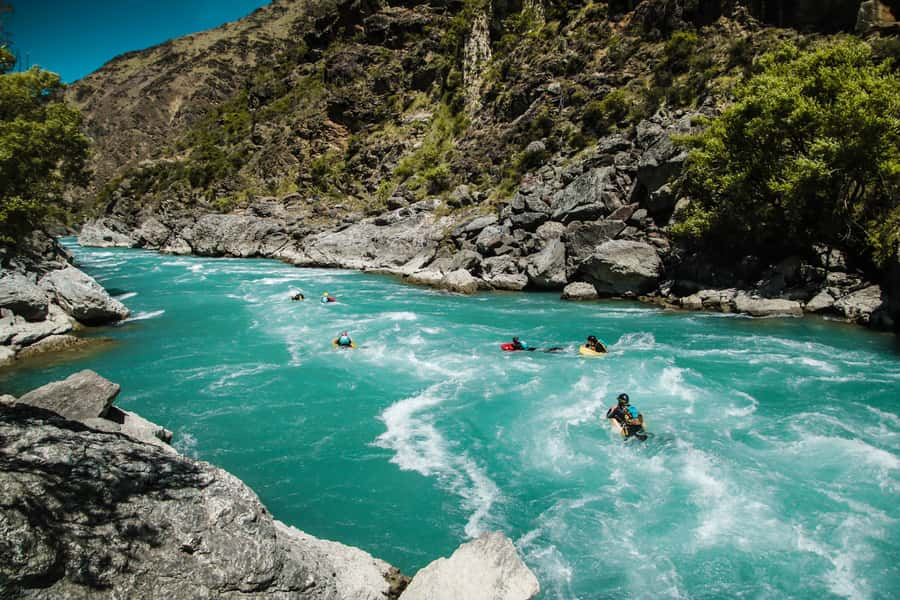
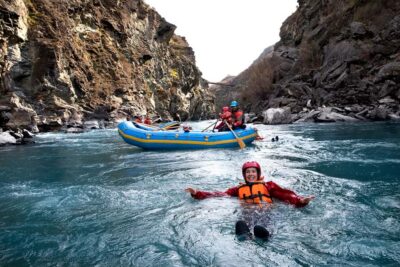
The unusual part comes quickly: you do not sit in a raft on the Kawarau River. You lie on a small bodyboard and use your arms and fins to steer through grade 2 to 3 rapids, standing waves, whirlpools, and fast currents. It is active, wet, and much closer to the river than a standard rafting trip.
I like the small group of up to 10, which gives the guides room to keep an eye on each person. I also like that the trip includes the costly practical pieces: Queenstown transport, a 5mm wetsuit, helmet, wet shoes, life jacket, board, snacks, and drinks. The main caution is simple: this is not a gentle introduction for weak swimmers. One recent participant found the training stressful and felt the activity demanded strong leg power.
Key points to know before booking
- Up to 12 kilometers on the Kawarau: You spend about 1 to 1.5 hours actually in the river, not just watching it from the bank.
- Bodyboarding puts you in the action: The light board lets you move actively, steer, and choose how much excitement you want.
- Grade 2 to 3 rapids: Expect a real whitewater challenge, with calmer sections between the faster water.
- River surfing and whirlpools: You may try standing waves, spin through whirlpools, and catch underwater currents.
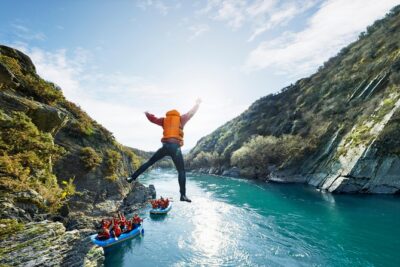
- A cliff-jump option adds variety: When conditions and the group allow, you can stop for a jump from the river cliffs.
- Practical limits matter: The activity is not suitable for non-swimmers, wheelchair users, people with mobility impairments, or children under eight.
Why the Kawarau River feels different on a bodyboard
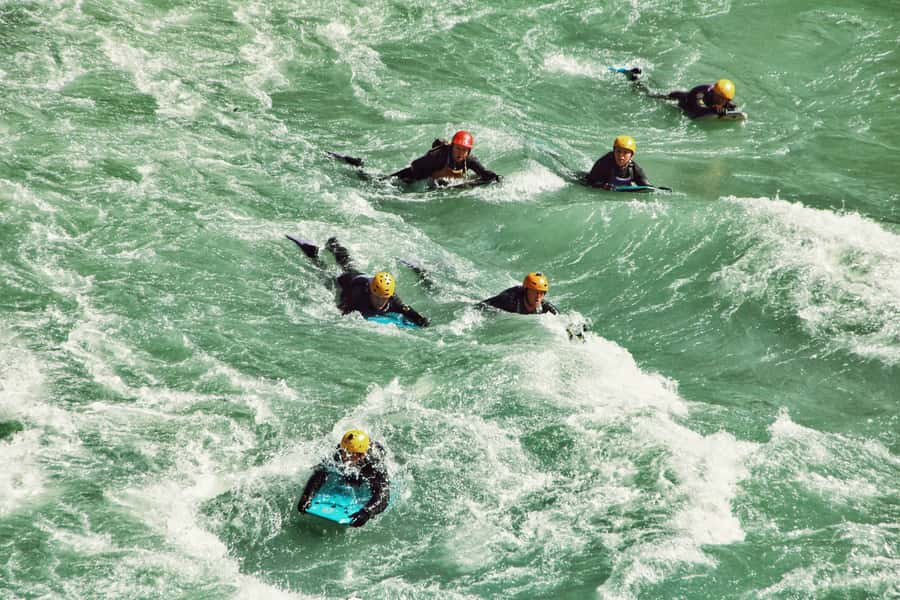
The Kawarau River is a natural fit for an active water trip. Its fast current gives the outing its force, while the calmer stretches let you look up at the rocky Kawarau Gorge and catch your breath.
A raft carries you through whitewater. A bodyboard makes you part of the movement. You kick, angle the board, read the current, and try to keep your line as the river pushes you along. That extra effort is exactly what makes this trip appealing to adventure seekers, but it also explains why the activity can feel harder than the cheerful photos suggest.
The board is light and highly maneuverable. You can choose a board based on how much adrenaline you want, so the equipment is not entirely one-size-fits-all. Still, you should expect to work with your legs and body. Fins are used, and that detail matters if you have limited swimming strength or tire quickly.
The whitewater reaches grade 2 to 3. That means the river is lively and demanding without being described as an extreme expert-only run. Conditions can change, though, and the operator can cancel or alter a trip if the river becomes unsafe, if too few people book, or if someone is judged unsuitable for the activity.
More White Water Rafting in New Zealand
- Rotorua Rafting: Kaituna River White Water Rafting & Free Sauna
★ 5.0 · 1,952 reviews - White Water Rafting – Kaituna Cascades, The Originals
★ 5.0 · 1,274 reviews - Rafting Rotorua: Kaituna River White Water Experience
★ 4.9 · 1,274 reviews
From Queenstown to Roaring Meg Power Station
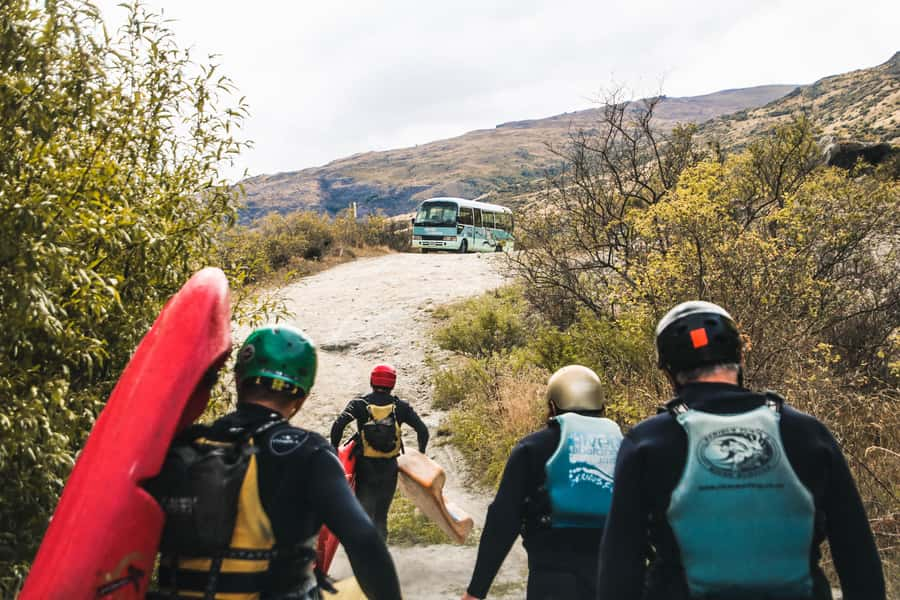
The full outing lasts about 270 minutes, or four and a half hours. It includes transport from central Queenstown, time at the river base, preparation, instruction, the river run, and a return trip.
The downtown meeting point is at the loading zone at 5 Duke Street, behind the bakery and opposite the Sofitel. Arrive at the stated departure time. The group meets on the street, and the vehicle leaves Queenstown then, so this is not a good activity for cutting things close.
If you are staying outside central Queenstown, you do not receive hotel pickup. You can drive to the base at Roaring Meg Power Station on Kawarau Gorge Road, arriving 45 minutes after the departure time. The instruction is to wait in the car park for the group. Check the timing carefully, since the Queenstown departure and the self-drive arrival time are different.
This transfer is useful because it removes the need to arrange your own river transport if you are in town. It also makes the tour easier to fit into a Queenstown stay, especially if you do not want to rent a car solely for the activity.
Getting suited up for cold New Zealand water
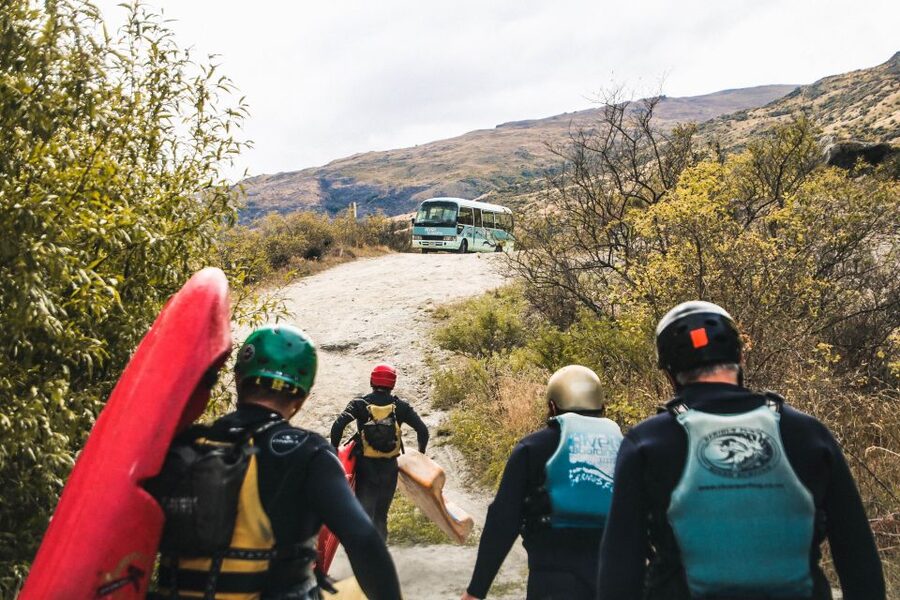
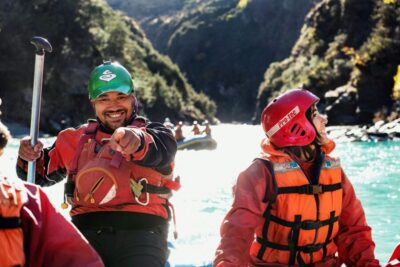
At the river base, you get a full 5mm wetsuit, wet shoes, helmet, life jacket, and bodyboard. Bring swimwear to wear beneath the wetsuit and bring a towel for afterward.
The thick wetsuit is more than a comfort extra. You will be in the water for roughly one to one and a half hours, and the suit helps you stay warm during the slower sections as well as the rapids. Wet shoes give your feet protection and help you work with the board and current. The helmet and life jacket are essential parts of the setup, not optional add-ons.
Training comes before the main run. You receive instructions on handling the board, moving through the current, and responding in the water. Pay close attention here. The training can involve several instructions at once, and one participant felt the practice area did not inspire enough confidence. If you are nervous, say so early and ask the guide to repeat anything unclear.
That concern should not automatically rule out the trip. The guides received very strong praise overall, with a 4.6 rating from 30 ratings and several top scores. The useful lesson is to be honest about your swimming ability and comfort level before you enter the river. A good guide can manage a suitable challenge. No guide can make a non-swimmer safe in moving whitewater.
The first rapids and the rhythm of the run
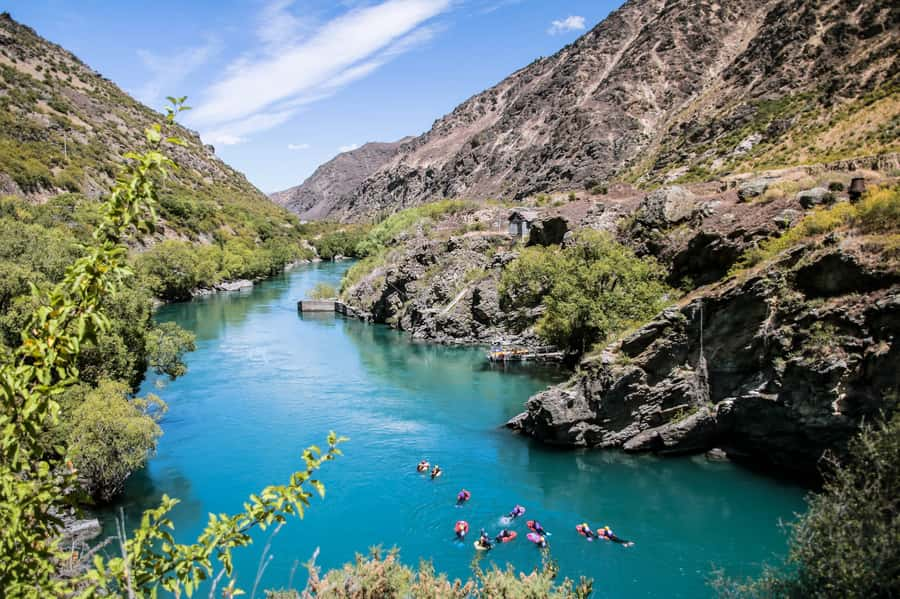
Once you enter the Kawarau, the trip alternates between active rapids and gentler river sections. The faster water asks you to react. The quieter stretches give you time to reset, enjoy the gorge, and listen for the next instruction.
Bodyboarding is more physical than floating. Your board is small, and you use your arms and fins to help steer. You may need to adjust your position quickly as the current changes. That makes the activity feel personal and immediate, but it can also wear you out.
The route can cover up to 12 kilometers. That is a useful measure of the scale of the outing, although the actual feel depends on the river conditions and the group. You are not sprinting the whole way. The gentler water provides a break, and the river itself supplies much of the forward motion.
The best approach is to treat the run as a sequence of short tasks. Handle the next rapid. Regain your position. Listen to the guide. Then enjoy the scenery until the next piece of whitewater arrives. Trying to view the whole trip as one long endurance test will make it seem tougher than it needs to be.
Same river, a different way down:
- Waitomo Caves: Labyrinth Black Water Rafting Experience
★ 4.9 · 1,673 reviews - Rafting Rotorua Kaituna White Water Rafting | Kaitiaki Adventures
★ 5.0 · 759 reviews - Rotorua Rafting: Kaituna River Rafting Experience-Free Sauna
★ 4.9 · 401 reviews - Kaituna River White Water Rafting from Rotorua
★ 5.0 · 388 reviews
Standing waves, whirlpools, and underwater currents
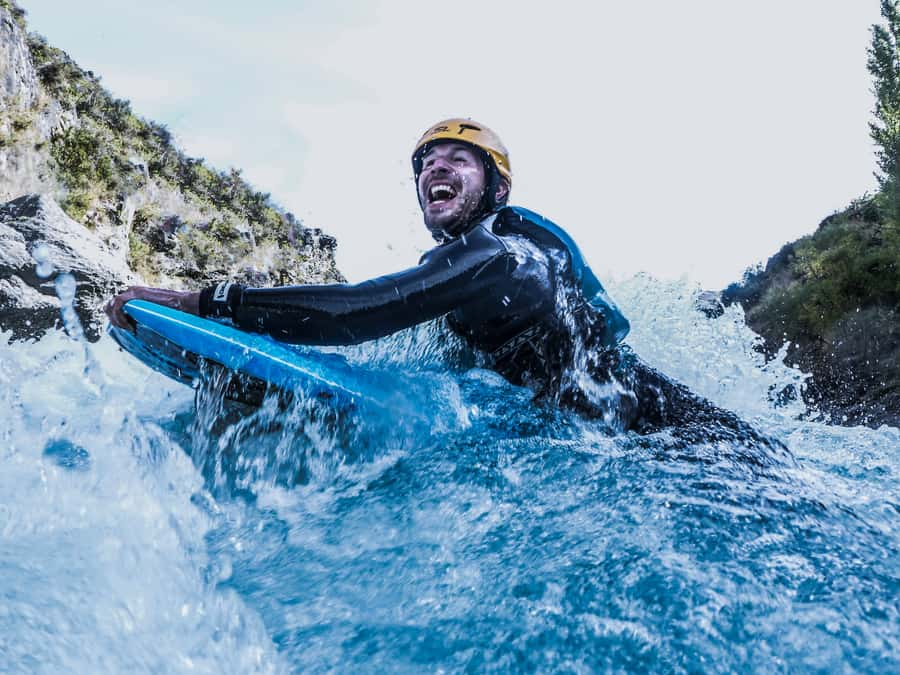
The trip offers more than a straight run downstream. You may try to surf a standing wave, ride a whirlpool, or catch an underwater current if you are ready for an extra challenge.
A standing wave gives you a chance to hold your position against moving water rather than simply being carried along. It is one of the most distinctive parts of riverboarding, and it rewards attention to balance and timing. You may find that the first attempt is more about staying oriented than looking stylish.
Whirlpools add another kind of test. The water turns you, and the board responds quickly. This is where the board’s maneuverability becomes useful. It is also where you should follow the guide’s instructions closely rather than attempting to improvise.
The underwater current option is for people who want the most intense version of the experience. You do not have to chase every challenge offered. The ability to choose your level is a real advantage, especially in a mixed group where one person wants a major adrenaline hit and another wants to build confidence gradually.
A cliff jump and a slower look at the gorge
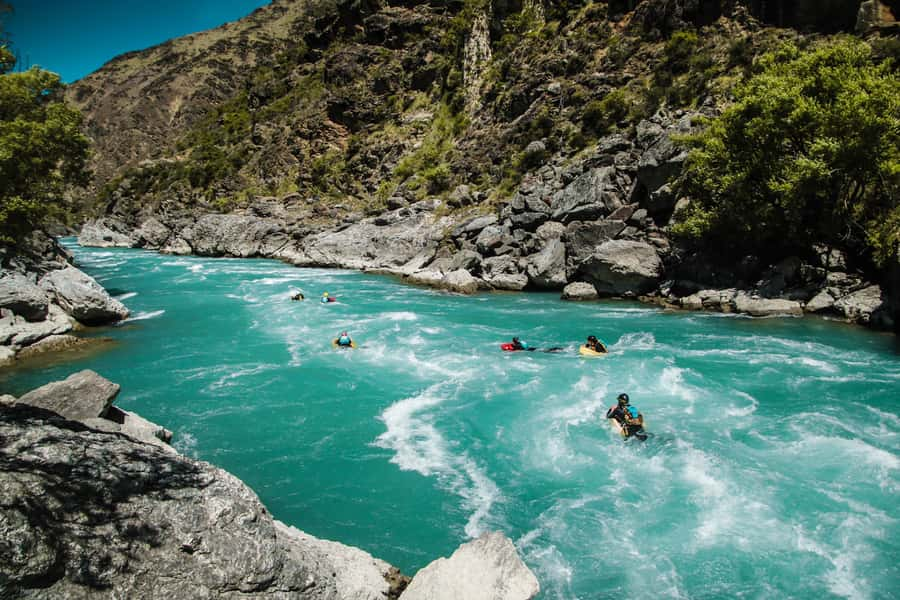
The calmer parts of the river are not wasted time. They let you take in the rock walls and the changing character of the Kawarau Gorge. This scenery is easy to miss when you are focused on the next rapid, so use the slower water to look around.
There may also be a stop for a jump from the cliffs along the river. This is an optional extra for people who want another burst of excitement. If you do not want to jump, the trip still has plenty of action in the water.
The combination of scenery, moving water, and optional challenges gives the outing a better shape than four hours of nonstop panic. You get moments to recover, but you do not lose the sense that the river is in charge.
What the $164 price includes
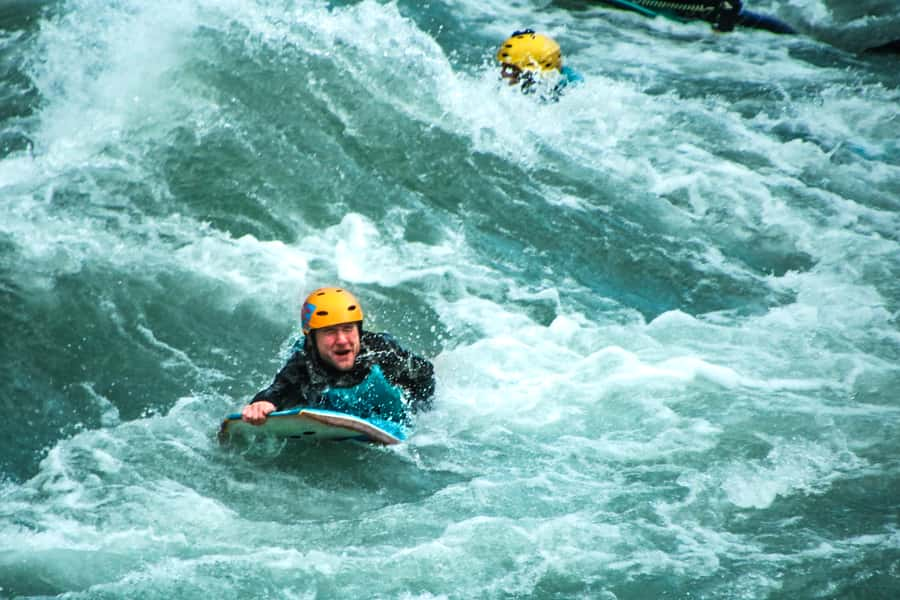
At $164 per person, this is not a cheap half-day activity. The value depends on how much you want an active river experience rather than a sightseeing cruise or a standard raft ride.
The price includes return transport from Queenstown, all major river equipment, a guide, light snacks, and refreshments. You do not need to buy or transport a wetsuit, helmet, shoes, life jacket, or board. Those inclusions matter in Queenstown, where adventure activities often require paid transport and specialized gear.
You are also paying for a small group, with no more than 10 participants. That is important for an activity where instructions and safety awareness matter. A large crowd would make the river feel less personal and could mean more waiting.
The weak point is that the price feels high if you expect a simple float with a little excitement. This is a hands-on activity that demands energy. You should book it for the unusual bodyboard format and the chance to surf river features, not simply for a scenic ride down the Kawarau.
Who will enjoy this most
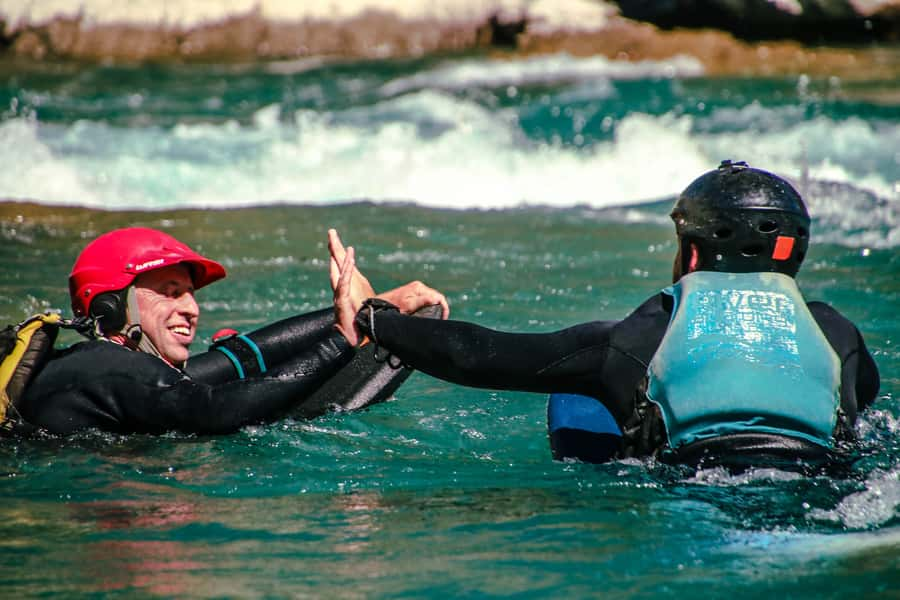
I would recommend the trip to a confident swimmer who wants to be active in the water and is happy to feel challenged. It suits someone who has already tried adventure activities and wants a more unusual version of whitewater travel.
It can also work for a first-time whitewater participant who is fit, attentive, and comfortable with instruction. You should not book it just because you can swim in a pool. Moving water, fins, a board, and repeated bursts of effort are a different combination.
Think carefully if you have weak leg power, poor stamina, or anxiety in fast water. The bodyboard gives you more control than simply floating, but it also asks you to participate. You cannot relax completely and let the river do all the work.
Children under eight cannot join. The activity is also not suitable for non-swimmers, wheelchair users, or people with mobility impairments. There are no details here about a special adaptive setup, so anyone with access needs should contact the operator before booking rather than assume the standard equipment will work.
Smart preparation for a better day
Wear swimwear that fits securely under the wetsuit. Bring a towel and arrive ready to listen. Since the river portion lasts a long time, eat sensibly beforehand, while remembering that light snacks and refreshments are supplied during the outing.
Allow extra time to reach the Duke Street meeting point. If you are driving to Roaring Meg Power Station, follow the separate self-drive timing and wait in the car park. Do not turn up at the base at the Queenstown departure time and expect the group to still be there.
Set your expectations correctly. You may get a gentler scenic run between rapids, but the main point is active whitewater. You may surf a standing wave or ride a whirlpool, but those features depend on conditions and your comfort. The operator can amend the trip if the river is unsafe.
Cancellation information is presented in two ways: one booking note allows cancellation up to 24 hours before departure, while the important information says a full refund requires at least 48 hours and no refund is offered within 48 hours. I would use the stricter 48-hour deadline and confirm the exact policy when booking.
The guide factor and the overall feel
The strongest part of the experience appears to be the guide team. Several recent ratings give the trip full marks and describe the crew as fun, reassuring, and caring. One person even returned to the activity after 17 years and enjoyed it again, which says something about the lasting appeal of the format.
That enthusiasm does not erase the need for clear instruction. The outing asks guides to keep the mood lively while also giving precise directions in a noisy river setting. Listen closely during the briefing, and speak up if you need a point explained again.
With only 10 people, the group should feel more manageable than a big commercial raft trip. You may still have different comfort levels in the same group. The optional nature of the harder challenges helps, since you can aim for the rapids and skip an underwater current or cliff jump if it feels beyond your limit.
Should you book Serious Fun Riverboarding?
Book this if you want to work with the river, not simply ride past it. The bodyboard format, standing-wave surfing, whirlpools, and possible cliff jump make it a distinctive Queenstown activity. The included transport and equipment also make the $164 price easier to justify.
Skip it if you are a weak swimmer, dislike cold moving water, or want a relaxed scenic outing. The trip is physically active, and one person’s poor experience shows that the training and water demands can feel overwhelming if your basic swimming skills are not strong.
For the right person, this is a memorable half-day challenge with excellent guide support, real scenery, and plenty of choice in how hard you push yourself. Go in prepared to kick, listen, and get thoroughly wet.
FAQ
How long does the whitewater riverboarding activity last?
The full activity lasts 270 minutes, or four and a half hours. About 1 to 1.5 hours is spent in the Kawarau River.
How far do you bodyboard?
You can bodyboard up to 12 kilometers along the Kawarau River.
What equipment is included?
The activity includes a full 5mm wetsuit, helmet, wet shoes, life jacket, and bodyboard. Return transport from Queenstown, light snacks, and refreshments are also included.
Where is the meeting point in Queenstown?
Meet at the loading zone at 5 Duke Street, at the back of the bakery and opposite the Sofitel. The group meets on the street and leaves at the departure time.
Can I drive to the river base instead?
Yes. If you are not staying in central Queenstown, you can drive to the base at Roaring Meg Power Station on Kawarau Gorge Road. Arrive 45 minutes after the listed departure time and wait in the car park.
Is the activity suitable for non-swimmers or young children?
No. It is not suitable for non-swimmers or children under eight. It is also not suitable for wheelchair users or people with mobility impairments.
New on the river around New Zealand
- Hanmer Springs Rafting and Quad Bike combo★ 5.0 · 14 reviews
- Black Water Rafting Semi Private Tour from Auckland★ 5.0 · 2 reviews
- Black Labyrinth: Black Water Rafting – Private Tour from Auckland★ 5.0 · 8 reviews
- Te Awa Kairangi Grade 2 Scenic Rafting Tour★ 4.8 · 10 reviews
- Rotorua Sledging: Kaituna White Water River Board Experience★ 4.8 · 36 reviews
- Rotorua: Tarawera River Raft and Kayak Adventure★ 5.0 · 2 reviews
- Rotorua: Kaituna Rafting & Mt. Tarawera Guided Hike Combo★ 4.5 · 11 reviews
- Rangitaiki Rafting Grade 3-4★ 4.7 · 16 reviews
Queenstown Rafting Tours, compared.
Family Adventures Rafting and Sightseeing Trip in Queenstown
Read our review →
Other lists with this river day